

Turn WooCommerce
Complexity Into a
Stronger Revenue System
Identify what deserves deeper investigation before investing in
another isolated fix, plugin, or redesign.
Plugins, custom code, integrations, and years of incremental changes can make an established WooCommerce store harder to operate—and harder for customers to use.

When WooCommerce Flexibility Starts
Limiting Progress
WooCommerce can support complex products, customer groups, subscriptions, integrations, and
international operations. But when new requirements are solved one at a time, the store can
remain functional while becoming increasingly difficult to manage, measure, and improve.
Slow product pages, confusing variations, ineffective search, mobile usability problems, and unstable cart or checkout behavior can interrupt customers at critical purchasing moments.
Overlapping plugins, theme dependencies, undocumented custom code, and incompatible update cycles can increase the time, cost, and risk involved in every change.
Fragile payment, inventory, fulfillment, subscription, tax, or marketing integrations can create problems beyond the storefront—from incomplete data to order-processing failures.
When analytics, funnel events, and behavioral evidence are incomplete, teams may address the most visible problem instead of the constraint with the greatest revenue or operational impact.
Customer friction
Slow product pages, confusing variations, ineffective search, mobile usability problems, and unstable cart or checkout behavior can interrupt customers at critical purchasing moments.
Platform complexity
Overlapping plugins, theme dependencies, undocumented custom code, and incompatible update cycles can increase the time, cost, and risk involved in every change.
Operational instability
Fragile payment, inventory, fulfillment, subscription, tax, or marketing integrations can create problems beyond the storefront—from incomplete data to order-processing failures.
Unreliable prioritization
When analytics, funnel events, and behavioral evidence are incomplete, teams may address the most visible problem instead of the constraint with the greatest revenue or operational impact.
Where WooCommerce Optimization Can Create
Meaningful Improvement
Effective optimization considers how the storefront, platform architecture, integrations, and operating
requirements affect one another. The objective is not to chase a universal performance score or install more
tools. It is to improve the conditions that influence customer progression, platform reliability, and revenue.
Navigation, search, category pages, product pages, variations, mobile usability, cart, and checkout all influence whether customers can find the right product and complete a purchase without avoidable friction.
Cultura evaluates the entire purchasing path to identify where customers encounter confusion, hesitation, errors, or unnecessary effort.
Plugins, themes, and custom code should support the business without making every release unpredictable.
Optimization can clarify dependencies, eliminate redundant functionality, correct configuration problems, and establish a more manageable foundation for future changes. Plugins are not removed simply because a store uses many of them. Each component is evaluated according to its purpose, quality, compatibility, performance impact, and maintainability.
A WooCommerce store depends on more than its visible pages. Payment gateways, shipping systems, inventory platforms, tax services, subscriptions, analytics, CRM tools, and marketing platforms must exchange information reliably.
Correcting integration and data-flow problems can improve both the customer experience and the internal processes required to fulfill orders, support customers, and make informed decisions.
B2B purchasing, specialized catalogs, subscriptions, customer-specific pricing, multiple currencies, multiple languages, multisite environments, and international operations introduce requirements that conventional optimization checklists often overlook.
These environments must be evaluated according to their actual customer groups, commercial rules, workflows, and technical dependencies.
Analytics should show how customers progress through the store and where meaningful friction occurs.
Validated tracking, behavioral evidence, and reliable funnel measurement provide a stronger basis for prioritizing changes, measuring their effects, and deciding where continued optimization should focus.
Improve product discovery and purchasing
Navigation, search, category pages, product pages, variations, mobile usability, cart, and checkout all influence whether customers can find the right product and complete a purchase without avoidable friction.
Cultura evaluates the entire purchasing path to identify where customers encounter confusion, hesitation, errors, or unnecessary effort.

Regain control of the WooCommerce environment
Plugins, themes, and custom code should support the business without making every release unpredictable.
Optimization can clarify dependencies, eliminate redundant functionality, correct configuration problems, and establish a more manageable foundation for future changes. Plugins are not removed simply because a store uses many of them. Each component is evaluated according to its purpose, quality, compatibility, performance impact, and maintainability.
Strengthen integrations and operations
A WooCommerce store depends on more than its visible pages. Payment gateways, shipping systems, inventory platforms, tax services, subscriptions, analytics, CRM tools, and marketing platforms must exchange information reliably.
Correcting integration and data-flow problems can improve both the customer experience and the internal processes required to fulfill orders, support customers, and make informed decisions.

Support complex commerce requirements
B2B purchasing, specialized catalogs, subscriptions, customer-specific pricing, multiple currencies, multiple languages, multisite environments, and international operations introduce requirements that conventional optimization checklists often overlook.
These environments must be evaluated according to their actual customer groups, commercial rules, workflows, and technical dependencies.

Create more reliable measurement
Analytics should show how customers progress through the store and where meaningful friction occurs.
Validated tracking, behavioral evidence, and reliable funnel measurement provide a stronger basis for prioritizing changes, measuring their effects, and deciding where continued optimization should focus.
Strengthen the Platform
Supporting the
Customer Lifecycle
WooCommerce Optimization addresses the platform-specific conditions affecting the store experience, data quality, integrations, and operational reliability.

From Diagnosis to Measured Improvement
WooCommerce Optimization begins with a defined diagnostic. Cultura evaluates the store as both a customer experience and an operating platform, then directly implements the priorities supported by the evidence.
Define revenue priorities, customer groups, product requirements, operational workflows, known challenges, and complex commerce needs such as B2B, subscriptions, international operations, multiple storefronts, and critical integrations.
Review customer behavior, store performance, WooCommerce architecture, custom code, and integrations to identify the true source of visible problems.
Prioritize findings by revenue potential, customer friction, risk, dependencies, implementation effort, measurement, and testing requirements to create a focused roadmap.
Implement and validate the approved configuration, UX, development, integration, analytics, performance, or architecture improvements. A complete redesign is recommended only when rebuilding offers greater commercial value than continued optimization.
Once the initial WooCommerce priorities are addressed, the engagement can progress into ongoing Revenue Optimization.
1. Establish the business context
Define revenue priorities, customer groups, product requirements, operational workflows, known challenges, and complex commerce needs such as B2B, subscriptions, international operations, multiple storefronts, and critical integrations.
2. Examine customer and platform evidence
Review customer behavior, store performance, WooCommerce architecture, custom code, and integrations to identify the true source of visible problems.
3. Prioritize the opportunities
Prioritize findings by revenue potential, customer friction, risk, dependencies, implementation effort, measurement, and testing requirements to create a focused roadmap.
4. Implement and validate
Implement and validate the approved configuration, UX, development, integration, analytics, performance, or architecture improvements. A complete redesign is recommended only when rebuilding offers greater commercial value than continued optimization.
5. Continue Revenue Optimization
Once the initial WooCommerce priorities are addressed, the engagement can progress into ongoing Revenue Optimization.
WooCommerce Optimization
Across the Entire Store
The diagnostic determines which capabilities should be prioritized and implemented.
Platform Architecture and Performance
Improve platform stability, speed, compatibility, and maintainability.
Complex Commerce
Store Experience and Checkout
Reduce friction across product discovery, purchasing, checkout, and customer accounts.
Redesigns and Migrations
Rebuild or migrate when optimization of the existing environment is no longer commercially practical.
Integrations and Operations
Strengthen the systems and data flows supporting commerce operations.
Platform Health and Infrastructure
Address application-level conditions affecting reliability, measurement, rendering, and crawlability.
Relevant WooCommerce
Experience
Experience across subscriptions, specialized products,
complex catalogs, custom purchasing requirements,
integrations, and evolving operational needs.

Complex Catalog & Custom Purchasing
Supporting Specialized Products
and Purchasing Requirements
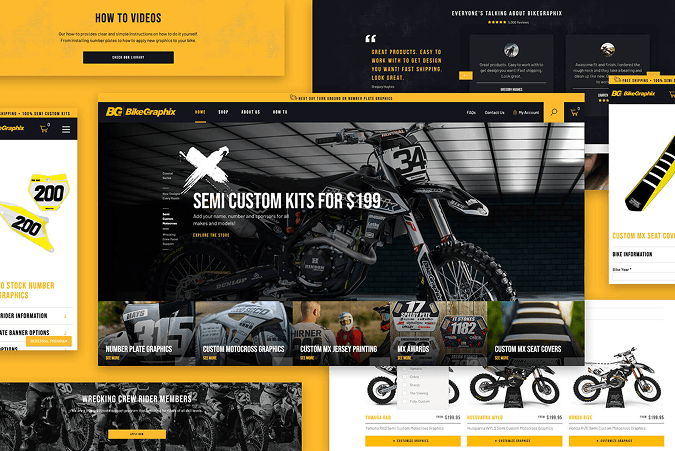
BikeGraphix represents WooCommerce experience involving
specialized products, complex catalogs, customized purchasing
requirements, and the customer journeys needed to support them.

Complex Catalog & Custom Purchasing
Supporting Specialized Products
and Purchasing Requirements
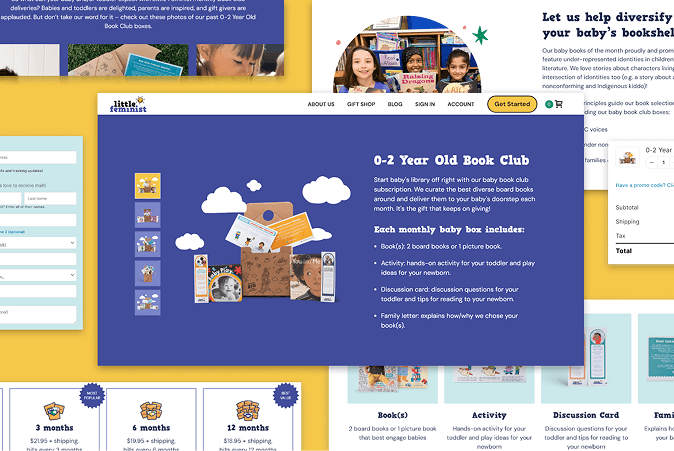
Little Feminist represents experience within a WooCommerce
subscription environment. The specific platform, development,
integration, subscriber-experience, automation, and retention work
should be confirmed before publication.
Explore WooCommerce Optimization Resources
These resources provide additional context for improving conversion, checkout, and subscription commerce within WooCommerce.
FAQ
1. What is WooCommerce optimization?
WooCommerce development provides the technical work required to build or change a store. WooCommerce Optimization determines what should be improved, why it matters, and how the work should be prioritized across customer, revenue, technical, and operational requirements.
Cultura combines both disciplines by conducting the diagnostic, establishing the priorities, and directly implementing the approved work.
2. How is WooCommerce optimization different from WooCommerce development?
WooCommerce development provides the technical work required to build or change a store. WooCommerce Optimization determines what should be improved, why it matters, and how the work should be prioritized across customer, revenue, technical, and operational requirements.
Cultura combines both disciplines by conducting the diagnostic, establishing the priorities, and directly implementing the approved work.
3. How is WooCommerce Optimization different from eCommerce CRO?
WooCommerce Optimization addresses platform-specific technical, experiential, integration, and operational conditions within WooCommerce.
eCommerce Conversion Rate Optimization is platform-neutral and concentrates more broadly on customer behavior, funnel performance, experimentation, and conversion improvement. The two services can intersect when WooCommerce conditions affect customer progression or prevent CRO priorities from being implemented reliably.
4. Does WooCommerce Optimization begin with an audit?
Yes. The engagement begins with a defined diagnostic based on the store’s business priorities, customer behavior, platform architecture, performance, integrations, and operational requirements.
The resulting roadmap is prioritized according to revenue potential, customer friction, technical risk, dependencies, implementation effort, and measurement requirements. Cultura can then directly implement the approved work.
5. Can Cultura optimize an existing store without redesigning it?
Yes. Many WooCommerce stores can be improved through targeted changes to their theme, extensions, custom code, performance, customer experience, checkout, integrations, or analytics.
When the existing architecture creates excessive limitations or risk, Cultura may recommend a complete redesign after determining whether rebuilding represents a more commercially sound approach.
6. Does Cultura offer complete WooCommerce redesigns?
Yes. Cultura designs and develops complete WooCommerce redesigns when the existing theme, customer experience, or technical architecture cannot be improved efficiently through incremental changes.
A redesign may include strategy, UX and UI design, theme development, custom functionality, integrations, analytics, migration requirements, quality assurance, launch, and stabilization.
7. Does Cultura offer complete WooCommerce redesigns?
Yes. Cultura designs and develops complete WooCommerce redesigns when the existing theme, customer experience, or technical architecture cannot be improved efficiently through incremental changes.
A redesign may include strategy, UX and UI design, theme development, custom functionality, integrations, analytics, migration requirements, quality assurance, launch, and stabilization.
8. How do you decide whether a plugin should be kept, replaced, or customized?
Cultura evaluates the plugin’s business purpose, functional quality, performance impact, compatibility, maintainability, dependencies, update history, and overlap with other functionality.
The correct decision may be to retain and reconfigure it, replace it, consolidate functionality, modify the surrounding implementation, or develop a more appropriate custom solution.
9. Can too many WooCommerce plugins affect performance?
Plugin count alone does not determine performance. A single poorly implemented extension can create more difficulty than several efficient, compatible plugins.
Cultura evaluates what each extension loads, how it interacts with the database and other systems, whether it runs unnecessarily, and whether it introduces conflicts or redundant functionality.
10. Does Cultura optimize WooCommerce checkout?
Yes. Cultura can evaluate checkout fields, mobile usability, payment behavior, shipping and tax logic, coupon handling, validation messages, subscriptions, analytics, integrations, and order-confirmation reliability.
Checkout changes are evaluated alongside the business and operational rules required to process orders correctly.
11. Can Cultura optimize B2B WooCommerce stores?
Yes. WooCommerce Optimization can include B2B purchasing journeys, customer-specific pricing, wholesale roles, restricted catalogs, volume pricing, tax-exempt conditions, approvals, quotes, purchase orders, repeat ordering, and related integrations.
The engagement is adapted to the store’s customer groups, sales process, and operational requirements.
12. Do you support multisite and international WooCommerce stores?
Yes. Cultura can work with multisite, multilingual, multi-currency, multi-store, and international WooCommerce configurations.
The diagnostic considers how languages, currencies, regional content, payments, shipping, taxes, product availability, integrations, and analytics affect platform operation and the customer experience.
13. Does Cultura provide hosting migrations?
Cultura can assess hosting-related constraints and recommend when a migration or infrastructure change is appropriate. We coordinate the relevant technical requirements with qualified hosting partners and support the application-level work needed for the transition.
The hosting provider remains responsible for the infrastructure and services within its control.
13. Does this service include technical SEO?
Technical SEO within WooCommerce Optimization is limited to platform health. Cultura may address conditions involving performance, rendering, crawlability, broken behavior, platform output, or WooCommerce architecture.
It does not replace a complete SEO strategy involving keyword research, content production, authority development, or ongoing organic-search management.
14. Can Cultura migrate a store to WooCommerce?
Yes. WooCommerce migration is available as a supporting capability when it aligns with the business’s broader platform and optimization strategy.
Migration planning may include products, customers, orders, content, functionality, integrations, analytics, redirects, quality assurance, launch coordination, and stabilization.
15. Does Cultura optimize WooCommerce Subscriptions?
Yes. Cultura can optimize the technical and customer-experience conditions supporting WooCommerce Subscriptions.
When the primary objective involves reducing churn, improving cancellation or pause experiences, recovering failed payments, or coordinating subscriber email and SMS, the engagement may also incorporate Cultura’s Subscription Retention service.
16. What happens after the initial WooCommerce Optimization project?
After the initial priorities are implemented and validated, the relationship can continue through an ongoing Revenue Optimization program.
Continued work may focus on customer behavior, conversion paths, measurement, experimentation, content personalization, lifecycle automation, subscription retention, and implementation of new revenue priorities.
Let's unlock your store's full revenue potential.
Get a custom audit and see exactly where you’re losing
revenue—and how to fix it.
- Revenue leak breakdown
- Conversion & retention opportunities
- Personalization roadmap
- Priority action plan
- Estimated revenue impact