

Turn Customer Behavior Into More Relevant Lifecycle Journeys
Identify gaps and underused opportunities across the customer lifecycle.
Replace disconnected campaigns and basic flows with lifecycle marketing shaped by customer intent, purchase behavior, and relationship stage.
Lifecycle marketing automation creates a connected system. It determines what should happen next based on who the customer is, what they have done, and where they are in their relationship with the business.
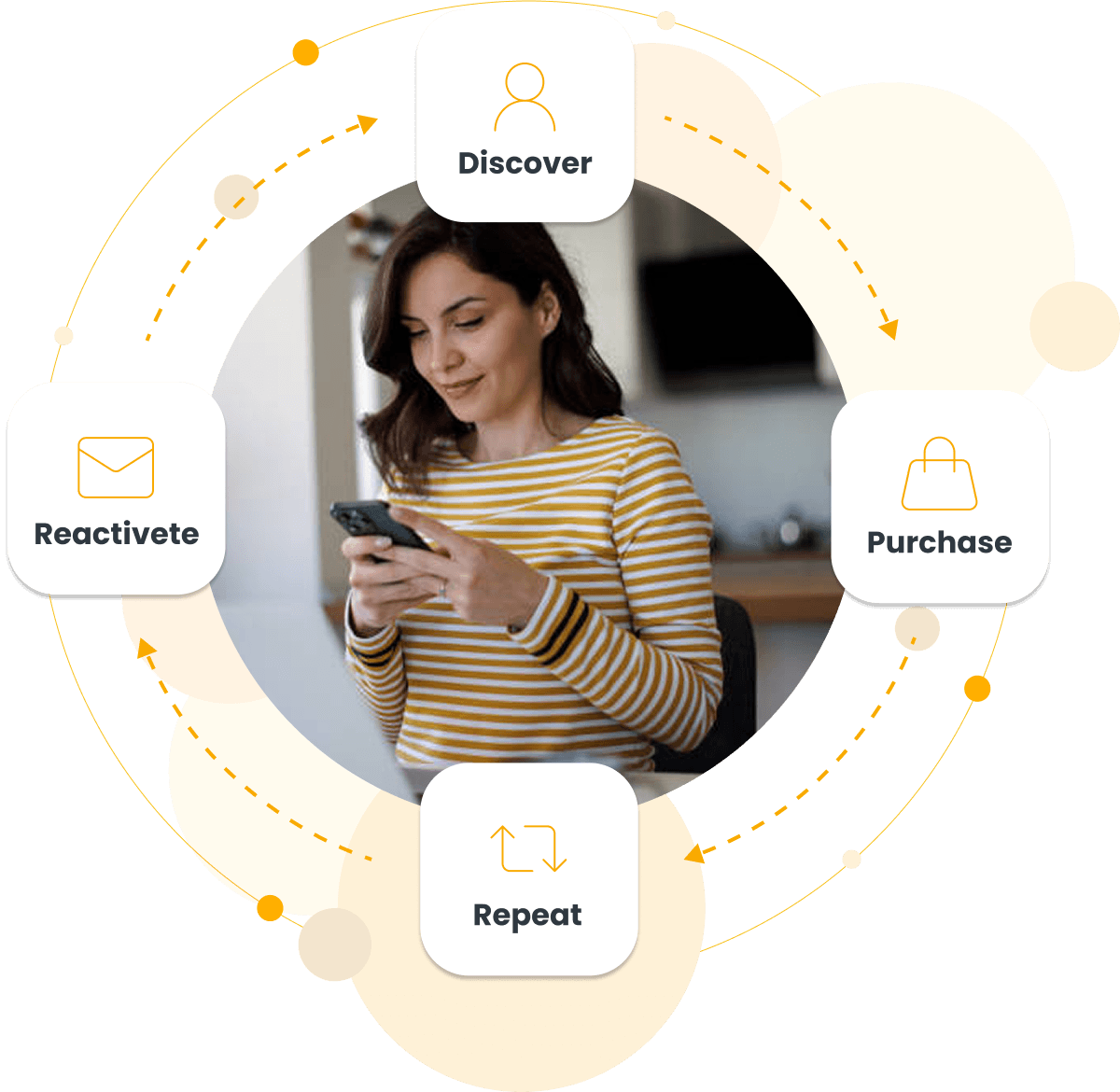
Having Automations Does Not Mean You Have a Lifecycle System
Welcome emails, cart reminders, post-purchase messages, and win-back flows may already be running. Problems emerge when each automation operates independently — even as customer behavior and commercial priorities change.
What you have now
- Broad audience groups
- Fixed schedules
- Independent flows
- Repetitive reminders
- Set-and-forget execution
What Lifecycle Marketing Creates
- Behavior- and lifecycle-based conditions
- Timing informed by customer activity
- Coordinated customer journeys
- Communication shaped by context
- Continuous testing and optimization
Find Where Lifecycle Gaps Limit Revenue
Revenue opportunities exist throughout the customer lifecycle and should strengthen the overall relationship—not become isolated marketing tasks.
Turn initial interest into a structured introduction to the brand, products, value proposition, and next action.
Respond to meaningful browsing, cart, and checkout behavior without relying on repetitive reminders or unnecessary discounting.
Support customers with relevant education, product guidance, feedback requests, and well-timed next-purchase opportunities.
Recognize purchasing patterns, product affinity, engagement, and customer value rather than treating every buyer the same.
Identify declining engagement or purchase activity early enough to test a more relevant response.
Each opportunity should support the wider customer relationship—not operate as a separate marketing task.
Post-purchase progression
Repeat purchase and customer value
Lapse and reactivation
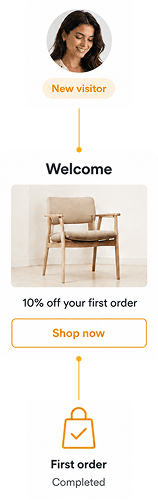
New customer conversion
Turn initial interest into a structured introduction to the brand, products, and value proposition.
The right progression helps new visitors understand why they should engage, what to explore next, and how to move toward a confident first purchase.
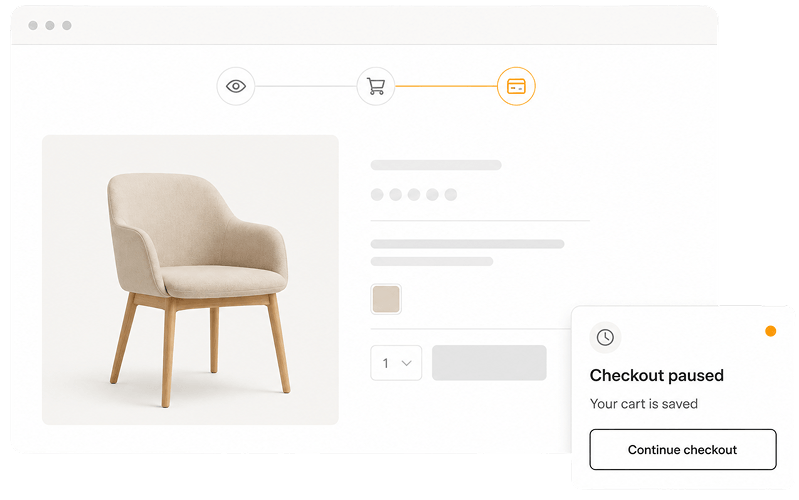
Purchase-intent recovery
Respond to meaningful browsing, cart, and checkout behavior while customer interest is still active.
Recovery should address hesitation, restore context, and support the purchase decision without relying on repetitive reminders or unnecessary discounting.
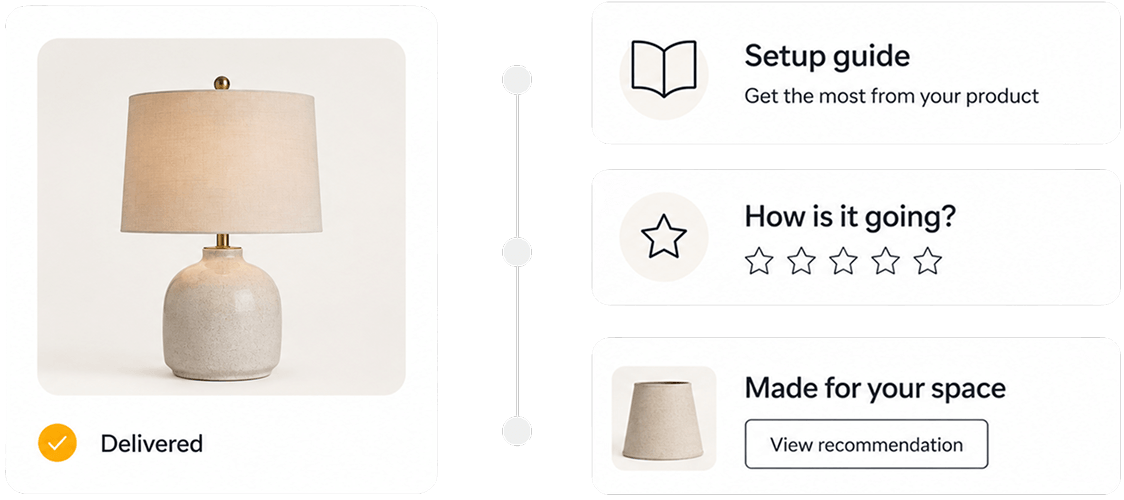
Post-purchase progression
Use the period after purchase to reinforce the customer’s decision and help them get more value from the product.
Relevant education, product guidance, feedback requests, and well-timed recommendations can create a natural path toward the next purchase.
Repeat purchase and customer value
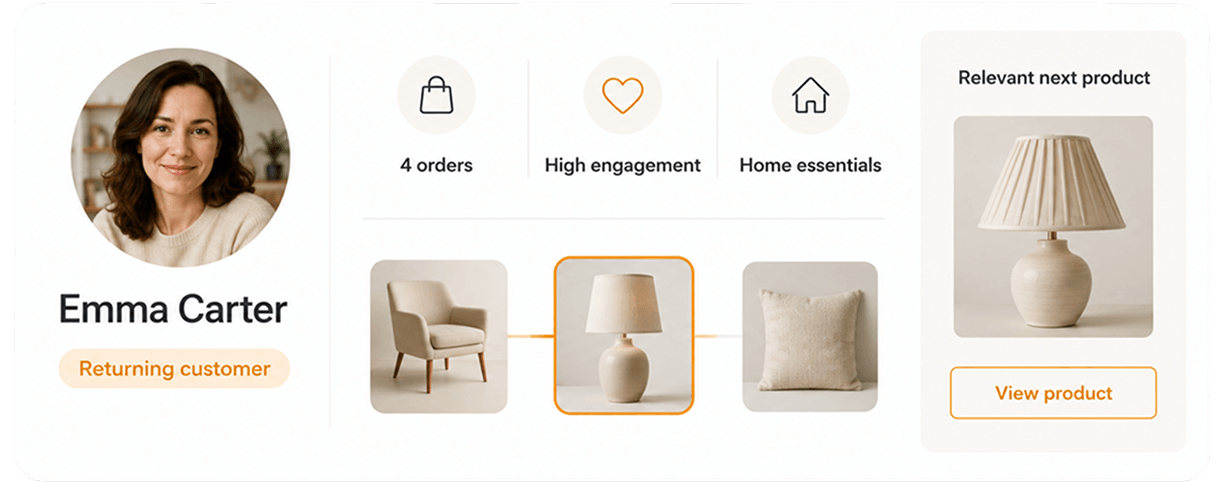
Recognize differences in purchase frequency, product affinity, engagement, and customer value.
More relevant communication can encourage replenishment, cross-category discovery, loyalty, and continued engagement without treating every customer as if they have the same relationship with the business.
Lapse and reactivation
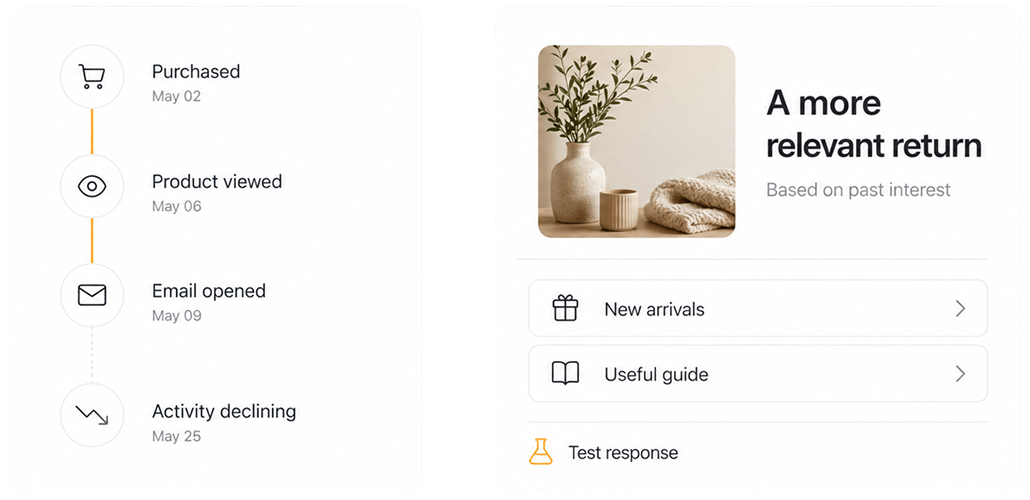
Identify declining engagement or purchase activity before the customer relationship is lost.
Use behavioral and purchase signals to deliver a more relevant response based on the customer’s history, interests, and likely reason for disengaging.
Connect Lifecycle Marketing to the Complete Revenue System
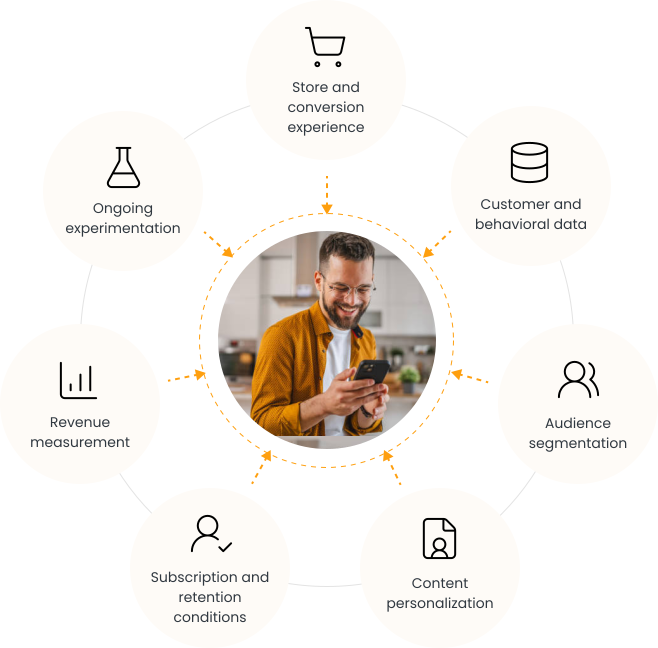
Customer communication cannot compensate for a confusing store, weak product presentation, unreliable data, or an offer that does not match customer intent.
marketing connects with:
Build the Program Around Real Customer Behavior
Effective lifecycle marketing connects reliable customer conditions, direct implementation, and ongoing learning.
Review existing journeys, segmentation, customer data, triggers, timing, message conflicts, and performance visibility.
The diagnosis determines what should remain, what needs improvement, and where meaningful lifecycle coverage is missing.
Map where customers stall, convert, repeat, disengage, lapse, or demonstrate new intent.
Priorities reflect potential business value, customer relevance, data readiness, and implementation requirements.
Define customer conditions, triggers, entry and exit rules, timing, frequency, message sequences, copy, creative, platform configuration, and quality assurance. The approach remains technology-agnostic. Platforms and integrations are selected according to the business model, available data, required journey logic, existing technology, and long-term operating needs.
Evaluate conversion, engagement, repeat purchase, reactivation, customer progression, and revenue contribution. Customer behavior and performance data inform refinements, experiments, and the next set of opportunities.
1. Diagnose the current system
Review existing journeys, segmentation, customer data, triggers, timing, message conflicts, and performance visibility.
The diagnosis determines what should remain, what needs improvement, and where meaningful lifecycle coverage is missing.
2. Prioritize the strongest opportunities
Map where customers stall, convert, repeat, disengage, lapse, or demonstrate new intent.
Priorities reflect potential business value, customer relevance, data readiness, and implementation requirements.
3. Design and implement the journeys
Define customer conditions, triggers, entry and exit rules, timing, frequency, message sequences, copy, creative, platform configuration, and quality assurance. The approach remains technology-agnostic. Platforms and integrations are selected according to the business model, available data, required journey logic, existing technology, and long-term operating needs.
4. Measure and improve continuously
Evaluate conversion, engagement, repeat purchase, reactivation, customer progression, and revenue contribution. Customer behavior and performance data inform refinements, experiments, and the next set of opportunities.
Support the Customer Across the Entire Relationship
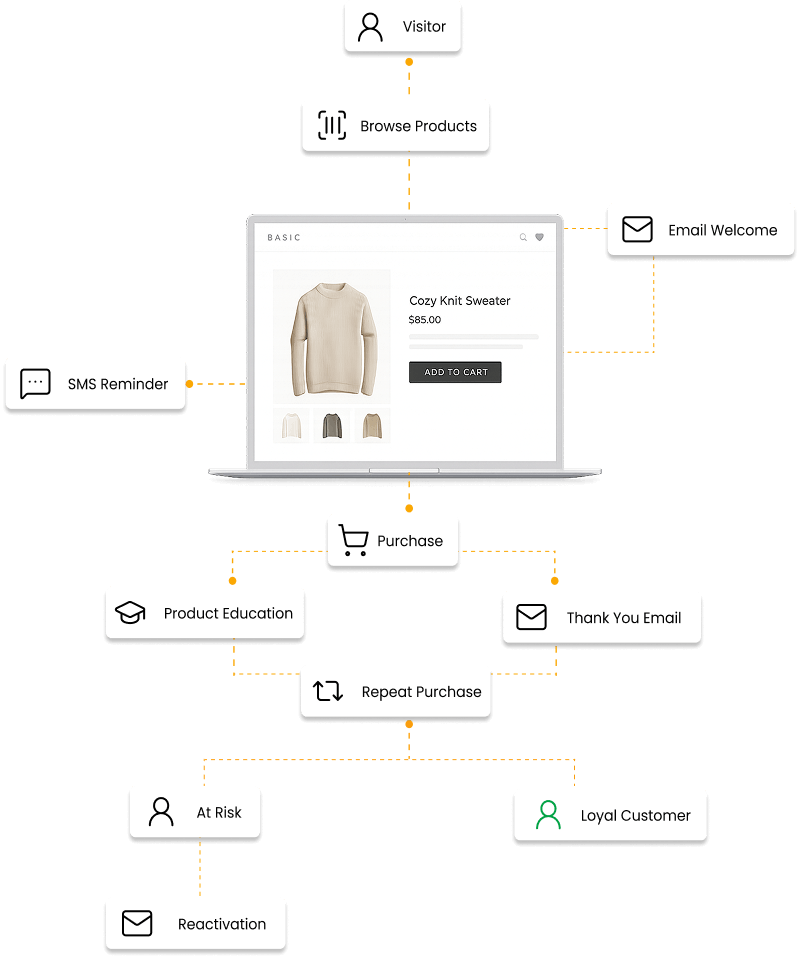
Journey priorities depend on the business model, buying
cycle, customer behavior, available data, and existing
lifecycle coverage.
- Acquisition and early engagement
- Purchase intent and conversion
- Post-purchase experience
- Repeat purchase and customer value
- Lapse prevention and reactivation
- Subscription events
Begin with the Current
Customer Journey
The Revenue Opportunity Assessment provides the starting point for understanding where the existing customer journey may be limiting revenue.
It establishes direction before the business commits to another redesign, app, campaign, or disconnected website initiative.
By identifying the opportunities that deserve closer attention, the assessment helps determine what to prioritize, where deeper investigation is needed, and how the next improvement can contribute to a more effective revenue system.
Lifecycle
Current lifecycle coverage, customer conditions, and journey logic.
Customer Data
Segmentation quality, behavioral and transactional data.
Performance
Message timing, overlap, conversion, retention opportunities, and performance visibility.
Priorities
Implementation priorities.
Explore Lifecycle Marketing and
Revenue Optimization
Learn how automation, customer behavior, conversion experience, content
personalization, and retention work together across the Revenue Optimization System.
FAQ
1. What is eCommerce lifecycle marketing automation?
eCommerce lifecycle marketing automation uses customer behavior, transaction history, engagement, and relationship stage to guide communication throughout the customer journey.
It can support initial conversion, purchase-intent recovery, post-purchase education, repeat purchases, reactivation, and retention. Unlike isolated flows, a lifecycle system coordinates communication around the customer’s changing condition and broader commerce experience.
2. How is lifecycle marketing different from basic marketing automation?
Basic automation usually consists of individual flows triggered by specific events, such as joining a list or abandoning a cart.
Lifecycle marketing considers how those flows work together. It defines customer conditions, timing, entry and exit rules, content relevance, and measurement across the relationship. Existing automations can remain part of the system when they continue to perform an appropriate role.
3. Is this a one-time automation setup?
No. The service is delivered through an ongoing Revenue Optimization program.
Initial work may include diagnosis, journey mapping, prioritization, implementation, and quality assurance. The program continues through measurement, testing, refinement, and the development of new opportunities as customer behavior and business priorities evolve.
4. Does Cultura provide strategy or implement the work?
Cultura provides strategy and direct implementation.
Depending on the approved scope, work may include journey architecture, segmentation, customer conditions, triggers, entry and exit rules, copy, creative, platform configuration, testing, quality assurance, measurement, and ongoing optimization.
5. Do our existing automations need to be replaced?
Not necessarily. Existing journeys should be evaluated before they are removed or rebuilt.
Effective automations may remain in place. Others may require improvements to their audience conditions, timing, sequence, content, coordination, or measurement. The objective is to strengthen the lifecycle system—not replace functional work without a clear reason.
6. Which lifecycle journeys can be included?
Journey categories may include acquisition and early engagement, purchase intent and conversion, post-purchase experience, repeat purchase, customer-value development, lapse prevention, reactivation, and subscription events.
The roadmap depends on the business model, buying cycle, customer behavior, available data, existing coverage, and highest-priority revenue opportunities.
7. Can subscription events be included?
Yes. Subscription events can inform onboarding, product education, renewal communication, and responses to changes in subscriber status.
Businesses requiring deeper work involving payment recovery, cancellation flows, subscriber portals, pause, skip, swap, involuntary churn, or subscriber-experience optimization should use Cultura’s dedicated Subscription Retention service.
8. Is the service tied to a specific marketing platform?
No. The approach is technology-agnostic.
Platform and integration recommendations depend on the business model, customer data, required journey logic, existing technology, implementation needs, and long-term operating goals. Strategy should determine the technology—not the other way around.
9. Is there a minimum revenue, traffic, order volume, or list size?
There is no universal qualification threshold.
Suitability depends on whether the business has enough customer activity, usable data, and meaningful lifecycle opportunities to support an ongoing program. The Revenue Opportunity Assessment helps determine whether the engagement is appropriate and where it should begin.
10. How is lifecycle marketing performance measured?
Measurement may include conversion, customer progression, engagement, repeat purchase, reactivation, journey interaction, and revenue contribution. The appropriate metrics depend on the purpose of each journey.
Open and click rates may provide supporting information, but they should not be treated as the complete measure of lifecycle performance.
11. How quickly should we expect results?
Timing depends on data quality, existing configuration, journey complexity, implementation requirements, customer buying cycles, traffic, and testing volume.
Some improvements can be implemented relatively quickly, while reliable performance evaluation may require longer observation. Cultura does not promise a universal timeline or guarantee a specific result.
12. How does lifecycle automation fit within Revenue Optimization?
Lifecycle automation is one part of a connected revenue system.
Its performance can depend on the store experience, merchandising, customer data, content personalization, offer strategy, subscription conditions, and retention experience. Revenue Optimization identifies which part of the system should be improved instead of assuming every problem can be solved through additional communication.
Let's unlock your store's full revenue potential.
Get a custom audit and see exactly where you’re losing
revenue—and how to fix it.
- Revenue leak breakdown
- Conversion & retention opportunities
- Personalization roadmap
- Priority action plan
- Estimated revenue impact