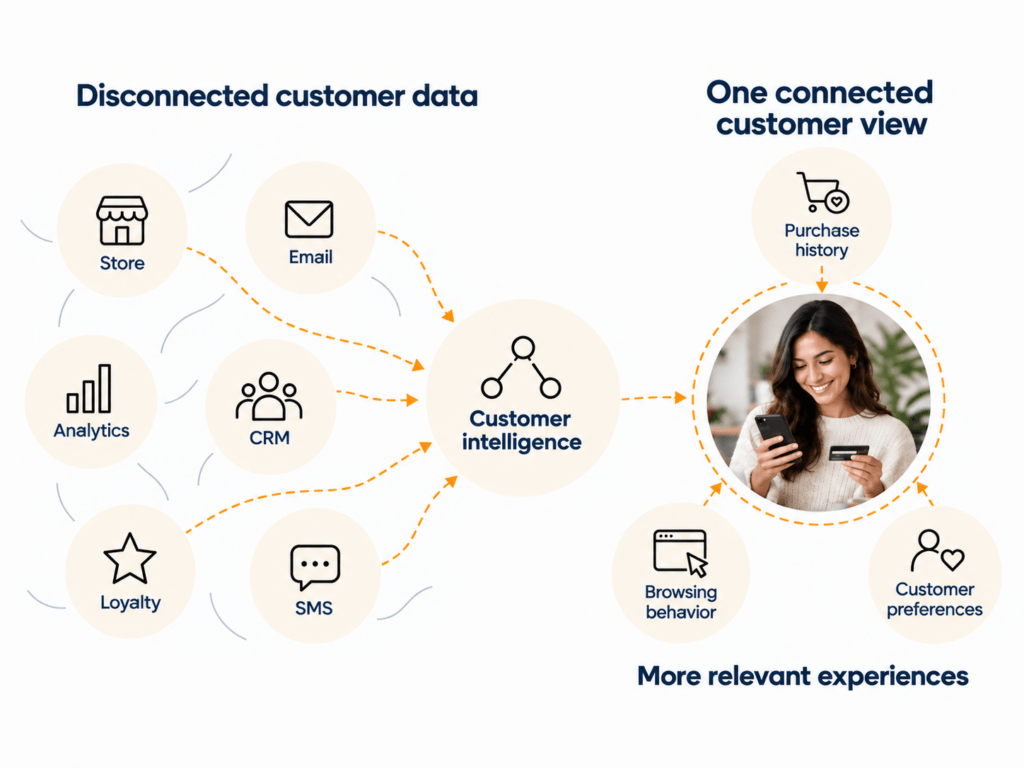
Most eCommerce technology stacks grow one tool at a time. The business starts with a store, then adds email marketing, analytics, a CRM, loyalty, SMS, customer service, and personalization tools as new needs appear.
Each platform solves a problem, but over time, the customer story becomes fragmented.
The commerce platform knows what someone purchased. The email platform knows what they clicked. Analytics shows what they browsed, while the loyalty program knows their status. The business has plenty of data, but no connected view of what the customer needs or what should happen next.
This is when an advanced customer intelligence platform for eCommerce can become valuable.
The question is not whether the business needs another marketing tool. It is whether customer data and experiences have become too complex to manage through disconnected platforms and static segments.
Here are the signs that it may be time for a more advanced approach.
What Is a Customer Intelligence Platform?
A customer intelligence platform brings customer data together so the business can better understand who each customer is, what they have purchased, how they are currently behaving, and where they are in the customer lifecycle.
More advanced platforms can use those signals to identify product interests, purchase intent, reorder opportunities, churn risk, customer lifetime value, and the next best action. This moves customer intelligence beyond reporting. The goal is not simply to know more about the customer. It is to use that knowledge to make segmentation, marketing, and the customer experience more relevant.
A CDP, CRM, Analytics Platform, and Customer Intelligence Platform aren’t the Same Thing
The technology landscape can make this decision confusing because many platforms share similar features. However, each one has a different primary role.
| Platform | Primary purpose |
|---|---|
| CRM | Manages known customer and prospect information, relationships, and sales activity. |
| Analytics platform | Reports on traffic, campaigns, conversions, and overall website performance. |
| Customer Data Platform (CDP) | Connects data from multiple sources to create unified customer profiles that other systems can use. |
| Customer intelligence platform | Uses customer profiles and behavioral data to identify patterns, predict needs, and determine what should happen next. |
Customer intelligence may include dynamic segmentation, behavioral analytics, recommendations, predictive models, and real-time personalization.
These platforms can overlap, but the difference is in how the data is used. For a growing eCommerce business, customer intelligence becomes more valuable when understanding past performance is no longer enough—and the business needs to respond to customers as their behavior changes.
Navigating the Technology Landscape
The technology landscape can make this decision confusing because many platforms share similar features. However, each one has a different primary role.
CRM (Customer Relationship Management)
Manages known customer and prospect information, relationships, and sales activity.
Analytics Platform
Reports on traffic, campaigns, conversions, and overall website performance.
CDP (Customer Data Platform)
Connects data from multiple sources to create unified customer profiles that other systems can use.
Customer Intelligence
Uses customer profiles and behavioral data to identify patterns, predict needs, and determine what should happen next.
May include:
- Dynamic segmentation
- Behavioral analytics
- Recommendations
- Predictive models
- Real-time personalization
These platforms can overlap, but the difference is in how the data is used. For a growing eCommerce business, customer intelligence becomes more valuable when understanding past performance is no longer enough—and the business needs to respond to customers as their behavior changes.
Sign #1 — Your Customer Data Is Spread Across Too Many Systems
The first warning sign is customer data spread across the commerce platform, CRM, email software, analytics, loyalty program, and other tools. Each system understands only one part of the customer journey.
Imagine a customer who purchased six months ago, recently opened several emails, returned to the website twice, repeatedly viewed one category, and added a product to their cart.
Viewed separately, these actions provide limited context. Together, they suggest that the customer may be close to purchasing again.
If those signals remain disconnected, the business may miss the opportunity—and the customer may still receive a generic experience despite showing clear intent.
Customer Data Architecture Review
If your customer data exists across multiple systems but you still struggle to understand the complete customer journey, adding another tool may not be the answer. At Cultura Interactive, we help eCommerce businesses evaluate how customer data flows across their commerce, CRM, automation, analytics, and personalization ecosystems.
Sign #2 — Your Segmentation Has Become Too Basic
Basic segments such as customers, subscribers, VIPs, and cart abandoners are useful starting points. But as the business grows, these broad groups may no longer provide enough context.
Advanced eCommerce customer segmentation combines signals such as browsing behavior, purchase frequency, recency, product interest, order value, and lifecycle stage.
Instead of targeting everyone who purchased Product A, the business could identify customers who purchased it, usually reorder within 60 to 90 days, recently returned to the website, but have not purchased again.
That audience has a specific need and a clear opportunity. They may respond to a timely reorder reminder, while a generic promotion would miss the reason they are likely to buy.
Sign #3 — You Can See Customer Behavior but Can’t Activate It
Another warning sign appears when your analytics understand more than your marketing can use.
The team can see what customers view, search for, add to their carts, and where they leave the funnel. But those insights remain inside reports. The website, emails, recommendations, and customer journey stay the same.
This is an activation gap: the business has useful information but cannot easily act on it.
A customer intelligence platform can help close that gap by allowing behavioral signals to update segments, personalize website content, improve recommendations, and trigger relevant communication across marketing channels.
Customer data becomes more valuable when it begins changing the experience—not simply describing what already happened.
Sign #4 — Your Website Needs to Respond Differently to Different Customers
As an eCommerce personalization strategy matures, one website experience may no longer be enough.
A first-time visitor may need a clear introduction to the brand. A returning browser may want to continue exploring a category they previously viewed. An existing customer approaching a reorder date may need a timely reminder, while a high-value customer may respond better to relevant recommendations or loyalty benefits.
Showing all four customers the same hero, products, promotion, and call to action ignores important context.
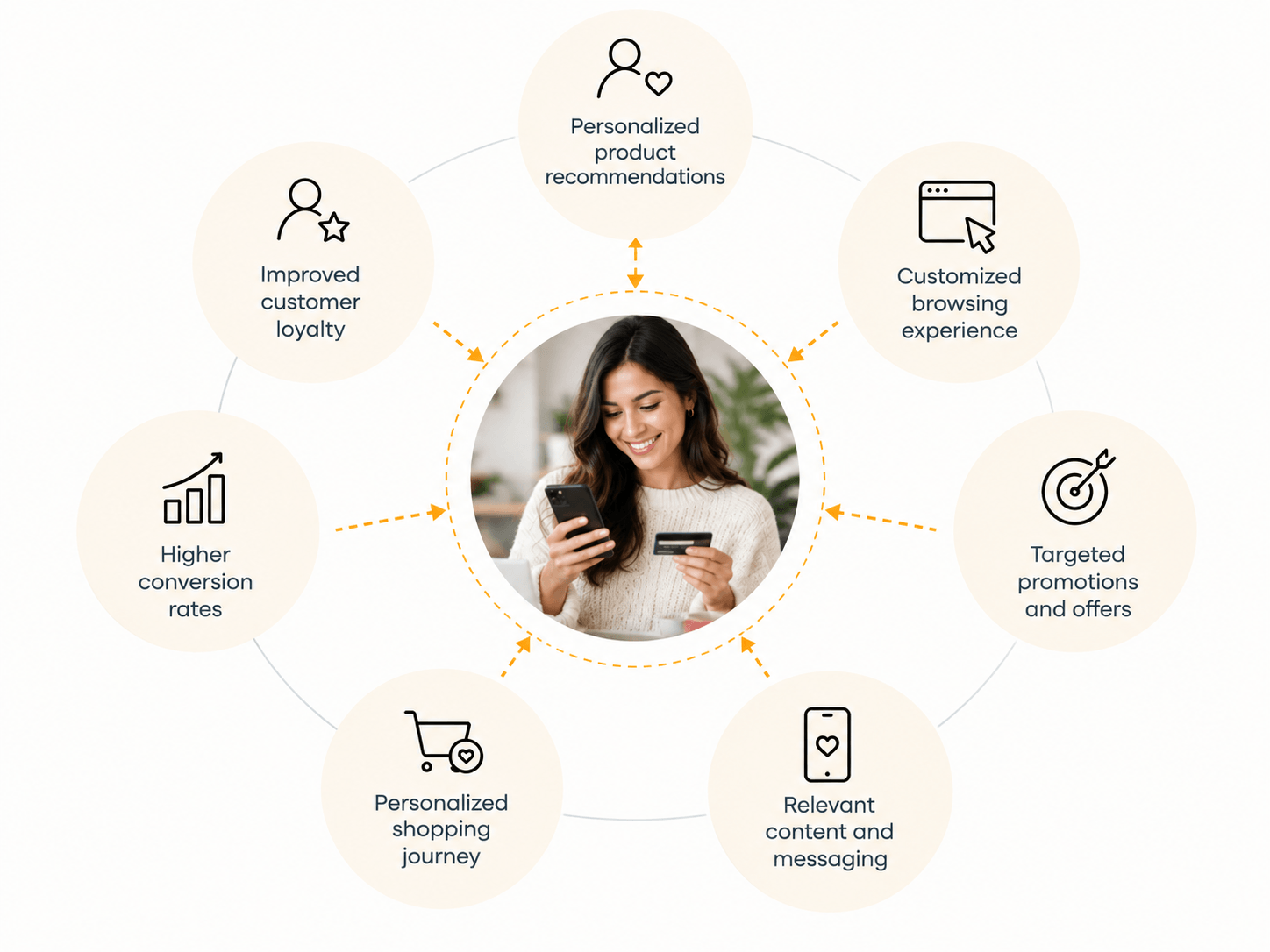
This is when real-time eCommerce personalization becomes valuable. Customer intelligence helps the business use current behavior, purchase history, and lifecycle stage to decide which experience is most relevant at that moment.
Sign #5 — Your Automation Has Become a Collection of Flows
Many eCommerce businesses already have welcome, abandonment, post-purchase, reorder, and winback automations. The problem is that these flows often operate independently.
A customer could qualify for a promotion, cart recovery, winback, and loyalty message at the same time. Without clear priorities, they may receive communication that is repetitive, irrelevant, or even contradictory.
The problem is not a lack of automation. It is a lack of orchestration.
An advanced customer intelligence platform can help customers move between segments and journeys as their behavior changes. Their emails, offers, and website experience can then respond to the same stage of the customer journey.
This moves the business from independent automation to connected customer journey orchestration.
If you already have multiple automations but your customer journey still feels fragmented, the next step may not be creating more flows.
It may be connecting them.
👉 Book a Growth Automation Review with Cultura Interactive to identify where segmentation, customer behavior, and automation can work as one system.
Sign #6 — Product Recommendations Need to Become Truly Personal
Many eCommerce stores already use product recommendations, but they often rely on simple rules such as bestsellers, related products, or recently viewed items.
Advanced AI product recommendations can use a wider range of behavioral and transactional data, including browsing history, previous purchases, current website activity, and product catalog information.
Platforms such as Synerise can use these signals to deliver personalized recommendations across the website, email, mobile, and push communication.
The difference is simple:
Basic recommendation: “This product is popular.”
Behavioral recommendation: “Based on this customer’s activity, this product may be relevant to them now.”
The Technology Maturity Journey for eCommerce
One way to evaluate readiness is to look at how the business currently uses customer data.
- Transactional commerce: The focus is on traffic, products, sales, and basic reporting.
- Marketing automation: The business adds email flows, cart recovery, post-purchase communication, and basic campaign segments.
- Behavioral segmentation: Customer actions begin shaping audiences, campaigns, and retention strategies.
- Experience personalization: Data influences website content, recommendations, offers, and customer journeys.
- Customer intelligence: Unified profiles, real-time segmentation, predictive analytics, AI recommendations, and journey orchestration work together.
A customer intelligence platform should be the next step in the business’s growth architecture—not simply another software purchase.
The Real Readiness Test
An eCommerce business may be ready for an advanced customer intelligence platform when:
- Customer data is spread across disconnected systems
- Behavioral insights remain inside reports instead of shaping experiences
- Basic segments and manual audience management are becoming limiting
- Multiple automation journeys need better coordination
- Real-time personalization and smarter recommendations are becoming priorities
- The team wants to predict customer behavior, not only report past results
If several of these signs sound familiar, the technology needs of the business may have changed.
The next step is not necessarily adding more marketing tools. It may be creating a customer intelligence layer that connects the data, platforms, decisions, and customer experiences already in place.
Is Your eCommerce Business Ready for Advanced Customer Intelligence?
You don’t need an advanced customer intelligence platform simply because the technology exists.
You need one when your growth strategy has become more sophisticated than the systems supporting it.
At Cultura Interactive, we help eCommerce businesses determine whether they’re ready for that next stage — and design the data, segmentation, automation, personalization, and implementation architecture required to make it useful.
Schedule a Customer Intelligence Strategy Call with Cultura Interactive
We’ll evaluate your current ecosystem, identify the gaps, and determine where advanced customer intelligence can create meaningful growth opportunities.