

Make Every Customer Experience More Relevant
Identify where more relevant experiences could create greater value from
your existing traffic and customer data.
Use customer behavior, intent, preferences, and purchase history to personalize products, content, offers, email, SMS, and lifecycle experiences. Cultura delivers eCommerce personalization through an ongoing Revenue Optimization program—from strategy and implementation to measurement and continuous improvement.
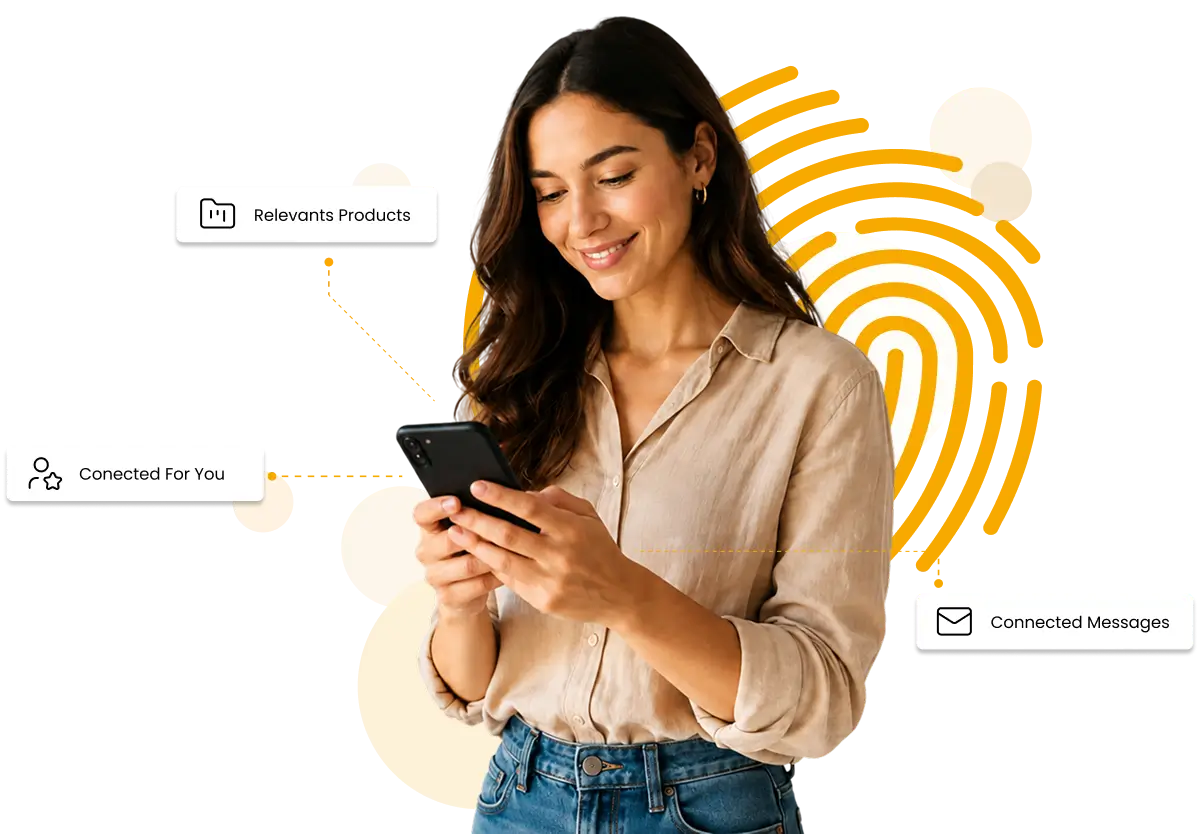
Generic Experiences Ignore What Customers Are Telling You
Customers experience product discovery, evaluation, selection, cart, and checkout as
one connected journey. Friction at any stage can make the next decision harder—even
when the store looks polished and operates as intended.
Campaign source, browsing behavior, and product affinity do not influence what customers see.
Purchase history, preferences, subscription status, and customer value are not reflected in content or merchandising.
The website, email, and SMS continue as separate conversations instead of responding to the same customer journey.
Customer information accumulates without a clear plan for using it to improve discovery, conversion, repeat purchases, or retention.
Different Intent,
Same Storefront
Campaign source, browsing behavior, and product affinity do not influence what customers see.
Known Customers
Treated as Anonymous
Purchase history, preferences, subscription status, and customer value are not reflected in content or merchandising.
Disconnected
Channels
The website, email, and SMS continue as separate conversations instead of responding to the same customer journey.
More Data,
Limited Action
Customer information accumulates without a clear plan for using it to improve discovery, conversion, repeat purchases, or retention.
Turn Customer Signals Into More Relevant Experiences
eCommerce personalization goes beyond product recommendations. It uses
meaningful customer differences to adapt products, content, offers, messages, and
journeys across the customer lifecycle.
Use browsing behavior, search activity, category affinity, purchase history, and real-time intent to prioritize relevant products, content, and merchandising.
Customers spend less time navigating unrelated options and receive clearer paths toward the products that matter to them.
Adapt product education, supporting content, calls to action, comparisons, social proof, and offers to the customer’s context and stage of consideration.
The objective is not to create unnecessary variations. It is to provide the information most relevant to the customer’s current decision.
Continue the conversation across channels by aligning storefront content and lifecycle communications with customer behavior, preferences, purchases, and engagement.
A customer should not receive a targeted message only to return to a generic store experience.
Use purchase history, expected replenishment cycles, subscription status, customer value, and inactivity signals to create more relevant post-purchase, cross-sell, replenishment, reactivation, and retention experiences.
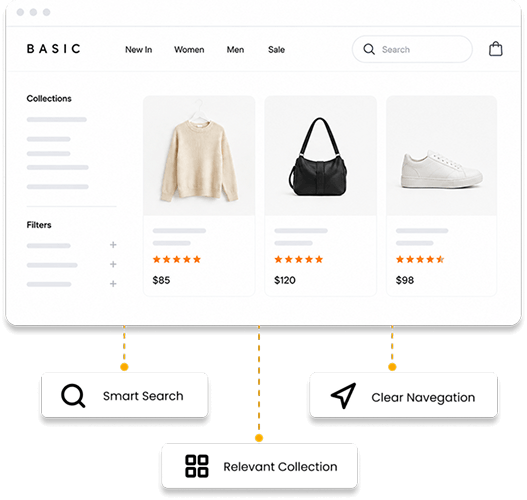
Improve Product Discovery
Use browsing behavior, search activity, category affinity, purchase history, and real-time intent to prioritize relevant products, content, and merchandising.
Customers spend less time navigating unrelated options and receive clearer paths toward the products that matter to them.
Strengthen Purchase Consideration
Adapt product education, supporting content, calls to action, comparisons, social proof, and offers to the customer’s context and stage of consideration.
The objective is not to create unnecessary variations. It is to provide the information most relevant to the customer’s current decision.

Connect Website, Email, and SMS
Continue the conversation across channels by aligning storefront content and lifecycle communications with customer behavior, preferences, purchases, and engagement.
A customer should not receive a targeted message only to return to a generic store experience.

Support Repeat Purchases and Retention
Use purchase history, expected replenishment cycles, subscription status, customer value, and inactivity signals to create more relevant post-purchase, cross-sell, replenishment, reactivation, and retention experiences.

Personalization Works
Within a Connected
Revenue System
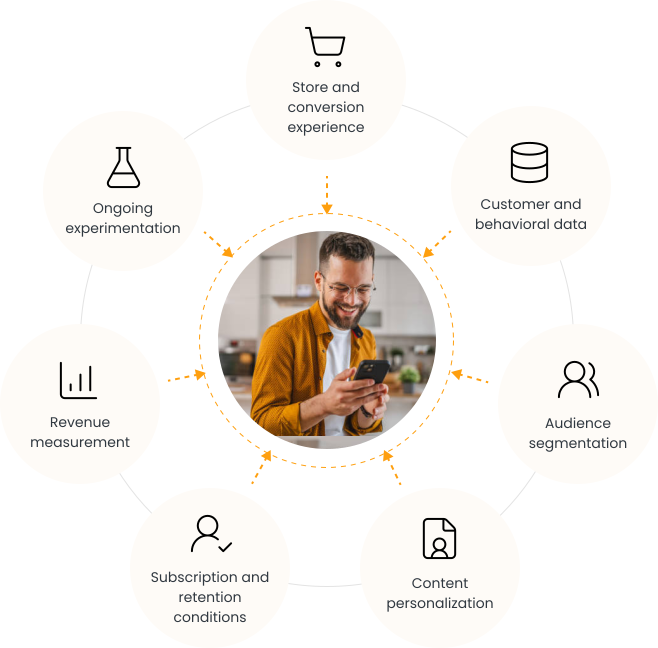
Personalization becomes more valuable when customer intelligence informs the complete experience—not isolated website components or campaigns.
Within Cultura’s Revenue Optimization System, acquisition context, behavioral intent, transactional data, and lifecycle status influence the content and journeys customers receive.
From Customer Signals to
Measurable Experiences
Personalization begins with a meaningful revenue or customer-experience
opportunity—not a widget, campaign, or technology purchase.
Review existing journeys, segmentation, customer data, triggers, timing, message conflicts, and performance visibility.
The diagnosis determines what should remain, what needs improvement, and where meaningful lifecycle coverage is missing.
Identify the customer groups, journey stages, and personalization opportunities with the clearest commercial relevance.
These may include first-time visitors, returning shoppers, category-focused customers, repeat buyers, subscribers, high-value customers, or customers showing signs of inactivity. Not every possible variation should be implemented.
Define who should receive each experience, what activates it, which content or journey changes, where it appears, which fallback is used, and how performance will be evaluated.
Cultura directly produces and implements the approved content, storefront experiences, recommendation logic, email, SMS, integrations, and measurement requirements within the agreed scope.
Each experience is validated before release to confirm that it reaches the intended audience under the correct conditions.
Evaluate performance, test meaningful alternatives, refine targeting and content, and prioritize the next opportunity.
Personalization is therefore available only through an ongoing Revenue Optimization program.
1. Evaluate Readiness and Opportunity
Review customer behavior, commerce data, product information, lifecycle communications, tracking, and integrations.
This establishes which signals are dependable, where data gaps exist, and where generic experiences may be limiting customer progression or value.
2. Prioritize Audiences and Use Cases
Identify the customer groups, journey stages, and personalization opportunities with the clearest commercial relevance.
These may include first-time visitors, returning shoppers, category-focused customers, repeat buyers, subscribers, high-value customers, or customers showing signs of inactivity. Not every possible variation should be implemented.
3. Design the Experience and Decision Logic
Define who should receive each experience, what activates it, which content or journey changes, where it appears, which fallback is used, and how performance will be evaluated.
4. Implement and Validate
Cultura directly produces and implements the approved content, storefront experiences, recommendation logic, email, SMS, integrations, and measurement requirements within the agreed scope.
Each experience is validated before release to confirm that it reaches the intended audience under the correct conditions.
5. Measure and Improve
Evaluate performance, test meaningful alternatives, refine targeting and content, and prioritize the next opportunity.
Personalization is therefore available only through an ongoing Revenue Optimization program.
Create Continuity From First Visit Through Retention
The appropriate personalization scope depends on the business model, customer
journey, available data, catalog, technology, and revenue opportunities.
Customer Intelligence
Use acquisition context, browsing behavior, product affinity, purchase history, engagement, lifecycle stage, subscription activity, and customer value to understand meaningful customer differences.
Personalized Experiences
Adapt storefront content, merchandising, product recommendations, email, SMS, and lifecycle communication to what each customer may need next.
Technology & Optimization
Connect data, platforms, measurement, experimentation, and implementation to continuously improve personalized experiences across the customer journey.
Advanced implementations may include Synerise for real-time intelligence and cross-channel execution.
Turn Every Customer Signal
Into a More Valuable Next Step
Connect data, content, products, email, and SMS around the outcomes that matter.
Where Should
Personalization Begin?
Personalization requires dependable data, meaningful customer differences, sufficient activity, and the operational ability to manage and improve the experiences being created.
Data & Tracking
Customer, behavioral, commerce, product, and integration readiness.
Customers & Patterns
Audience differences, purchasing behavior, customer value, and lifecycle stage.
Journey & Business Model
Storefront, catalog, subscriptions, email, SMS, and retention opportunities.
Ability to Improve
Measurement, implementation, testing, and ongoing refinement.
Build a More Effective Revenue Journey
Explore practical guidance on customer behavior, product-page performance, and
turning the store into a more productive revenue channel.
FAQ
1. What is eCommerce personalization?
eCommerce personalization adapts products, content, offers, messages, and customer journeys using relevant information about a visitor or customer. This may include traffic source, browsing behavior, product affinity, purchase history, engagement, lifecycle stage, subscription status, or customer value.
Cultura approaches it as Content Personalization across the website, email, SMS, and customer lifecycle—not only as personalized product recommendations.
2. What can be personalized beyond product recommendations?
Personalization can influence homepage content, campaign messages, promotional banners, product prioritization, category merchandising, educational content, calls to action, email and SMS communications, post-purchase journeys, replenishment, subscription experiences, and retention programs.
The appropriate applications depend on the customer journey, available data, business model, and identified revenue opportunity.
3. How is personalization different from conversion rate optimization?
Conversion rate optimization identifies and reduces friction that prevents customers from progressing or completing desired actions. Personalization determines when different customers should receive different content, products, messages, or journeys.
The disciplines work together, but they are not interchangeable. Personalization supports conversion optimization when customer differences are meaningful and the experience can be adapted reliably.
4. Does Cultura personalize Shopify and WooCommerce stores?
Yes. Cultura works with established Shopify, Shopify Plus, and WooCommerce businesses.
Depending on the engagement, the work may include strategy, content planning, experience design, storefront development, recommendation logic, integrations, email and SMS execution, measurement, and ongoing optimization. The final architecture depends on the store, its customer journey, and its existing technology.
5. How much traffic is needed for eCommerce personalization?
There is no universal minimum that applies to every eCommerce business.
Approximately 50,000 monthly visits can provide an especially favorable environment for developing audiences and evaluating personalized experiences. Businesses with lower traffic may still have valuable opportunities based on order volume, average order value, purchase frequency, customer lifetime value, subscription activity, catalog structure, or clearly identifiable customer groups.
6. What data is needed to begin?
Useful data may include website behavior, transactions, customer profiles, product information, acquisition sources, email and SMS engagement, subscription activity, and lifecycle status.
Not every implementation requires every data source. The information used must be reliable, accessible, and appropriate for the intended experience.
7. Can anonymous visitors receive personalized experiences?
Yes. Some experiences can respond to session-level signals such as traffic source, landing page, device, location, searches, products viewed, categories explored, and real-time browsing behavior.
Broader options may become available for recognized customers with reliable historical and transactional data. Implementations must account for applicable consent, privacy, and data-governance requirements.
8. Does personalization include email and SMS?
Yes. Cultura can plan, produce, implement, and optimize personalized email and SMS experiences within the agreed engagement scope.
These channels should respond to website behavior, purchase history, preferences, and lifecycle stage instead of operating as separate conversations disconnected from the storefront.
9. Does Cultura offer personalization as a standalone project?
No. Cultura provides personalization only through an ongoing Revenue Optimization program.
Personalized experiences require continued validation, content management, technical oversight, performance review, testing, and refinement. The ongoing model allows the program to respond to customer behavior and evolving business priorities.
10. Does personalization require replacing our current technology?
Not necessarily. The current commerce platform, tracking, customer data, integrations, lifecycle systems, and personalization capabilities are evaluated first.
Existing technology may be retained, extended, integrated, or replaced depending on the approved strategy and whether the current systems can reliably support it.
11. Does Cultura use Synerise for eCommerce personalization?
Cultura can implement personalization using Synerise when the business requires capabilities such as advanced customer intelligence, real-time behavioral data, AI-supported recommendations, dynamic content, and cross-channel execution.
Synerise is an implementation technology within the broader Revenue Optimization strategy. Its suitability depends on the business, available data, required use cases, and integration needs.
Let's unlock your store's full revenue potential.
Get a custom audit and see exactly where you’re losing
revenue—and how to fix it.
- Revenue leak breakdown
- Conversion & retention opportunities
- Personalization roadmap
- Priority action plan
- Estimated revenue impact