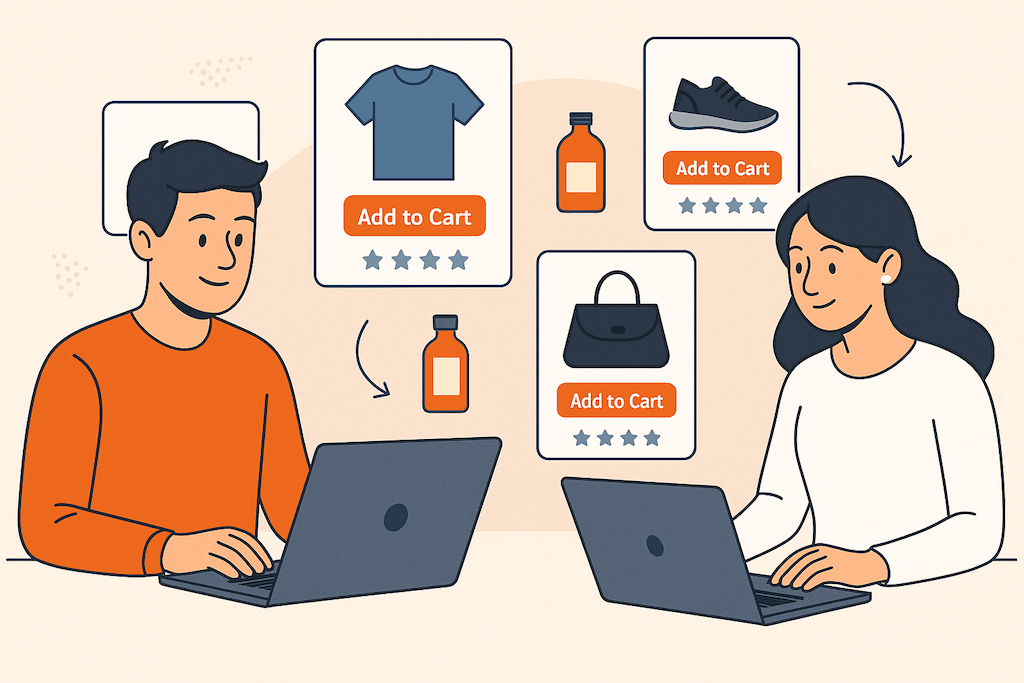


Most websites are still built around a one-size-fits-all experience. Every visitor sees the same headline, the same messaging, the same calls-to-action, and the same offers regardless of how they arrived, what they need, or where they are in the buying journey.
The problem is that customers do not behave uniformly. A first-time visitor from organic search has very different expectations than someone returning after downloading a case study or clicking on a retargeting campaign. When websites ignore those differences, friction increases. Messaging feels disconnected, engagement drops, and conversion opportunities are lost.
Behavioral website personalization changes this by allowing websites to adapt dynamically based on user behavior, intent signals, and customer data. Instead of delivering static experiences, companies can create responsive digital environments that guide visitors through the funnel with more relevance, better timing, and stronger alignment to business goals.
The result is not just a better user experience. It is a measurable improvement in conversion rates, lead quality, retention, and long-term revenue performance.
The Real Business Problem Behind Low-Converting Websites
Most businesses do not struggle because they lack traffic. In many cases, they struggle because the website experience does not evolve alongside customer intent.
A visitor researching solutions for the first time should not receive the same messaging as a prospect already evaluating pricing. Likewise, a returning customer should not be treated like an anonymous first-time visitor. Yet this is exactly how many websites operate.
Static experiences create unnecessary friction because they force users to sort through irrelevant information before finding what matters to them. Over time, this weakens engagement, increases bounce rates, and reduces the effectiveness of marketing investments.
The issue becomes even more significant for companies running multi-channel acquisition campaigns. Paid traffic, organic visitors, CRM-driven campaigns, and retargeting audiences all enter the website with different expectations. Without personalization, those differences are ignored, and conversion efficiency suffers across the funnel.
High-growth companies understand that improving conversions is not simply about driving more traffic. It is about improving how the website responds to user intent in real time.
Why Traditional Website Experiences Fail
The most common mistake businesses make is treating their website as a static presentation layer instead of an adaptive growth system.
Many organizations invest in personalization tools or plugins but never build the strategic architecture required to make personalization effective. As a result, personalization becomes superficial. A banner changes. A recommendation widget appears. But the broader customer journey remains disconnected.
This happens because the underlying systems are rarely connected properly.
Behavioral data is often fragmented across platforms. CRM systems operate independently from the website experience. Funnel stages are undefined. Automation workflows exist separately from on-site personalization logic. Without integration, personalization cannot evolve beyond isolated tactics.
The websites that consistently outperform competitors are not simply displaying dynamic content. They are using customer behavior to coordinate messaging, funnel progression, and conversion pathways across the entire digital experience.
Behavioral Personalization Works as a Connected System
Behavioral website personalization is most effective when it operates as part of a larger growth ecosystem that combines behavioral tracking, CRM intelligence, automation workflows, and funnel strategy.
At its core, personalization allows websites to adapt based on signals such as:
- Pages visited
- Traffic source
- Device type
- Geographic location
- Time on site
- Previous interactions
- CRM data
- Purchase history
- Funnel stage
These signals help businesses understand not only who the visitor is, but also what they are likely trying to accomplish.
Once that context exists, the website can dynamically adjust messaging, offers, CTAs, and content pathways to better align with user intent. Instead of presenting a generic experience, the website becomes responsive to customer behavior in real time.
This is where personalization shifts from being a UX feature to becoming a growth strategy.
First-Time Visitor
Cold Google Search
Returning Visitor
Read Case Study
Warm Prospect
Retargeting Ad
"Welcome to our Company"
One generic message for everyone. Ignores context, ignores intent, and kills conversions.
"Read our Beginner's Guide"
Educates the first-time visitor with low-friction content.
"See Advanced Features"
Pushes the returning reader to the next logical step.
"Claim Your 20% Offer"
Closes the deal with the retargeted, high-intent prospect.
5 Ways Smart Websites Use Behavioral Personalization
Smart personalization isn’t about installing plugins. It’s about architecting your CMS to respond intelligently to user behavior.
1. Dynamic Headlines Based on Traffic Source
Visitors from paid ads often have different intent than organic search visitors. With dynamic website content, you can:
- Adjust headlines based on campaign
- Match ad messaging with landing page copy
- Reinforce industry-specific positioning
Result: Higher message alignment → higher conversions.
2. Personalized CTAs Based on Funnel Stage
Not every visitor is ready to “Book a Demo.” Smart websites adjust CTAs based on behavior:
- First-time visitor → Download Guide
- Engaged returning visitor → Schedule Strategy Call
- High-intent user → Request Proposal
This moves users naturally through the funnel instead of forcing premature sales actions.
3. Industry-Specific Messaging
If you serve multiple industries, your homepage shouldn’t speak generically to all of them.
Behavioral personalization allows you to:
- Detect industry from data enrichment
- Show relevant case studies
- Highlight specific pain points
- Display industry-tailored testimonials
Relevance increases trust. Trust increases conversions.
4. Smart Content for Returning Visitors
Returning visitors are warm. Your website should recognize them.
Examples:
- Hide already downloaded offers
- Show next-step content
- Display progress-based messaging
- Introduce advanced offers
Instead of restarting the journey, you continue it.
5. Personalized Nurturing Integrated with Automation
Behavioral personalization becomes exponentially more powerful when integrated with marketing automation.
For example:
- User visits pricing page → triggers targeted email sequence
- User spends 3+ minutes on services page → sends sales alert
- User downloads specific resource → enters segmented workflow
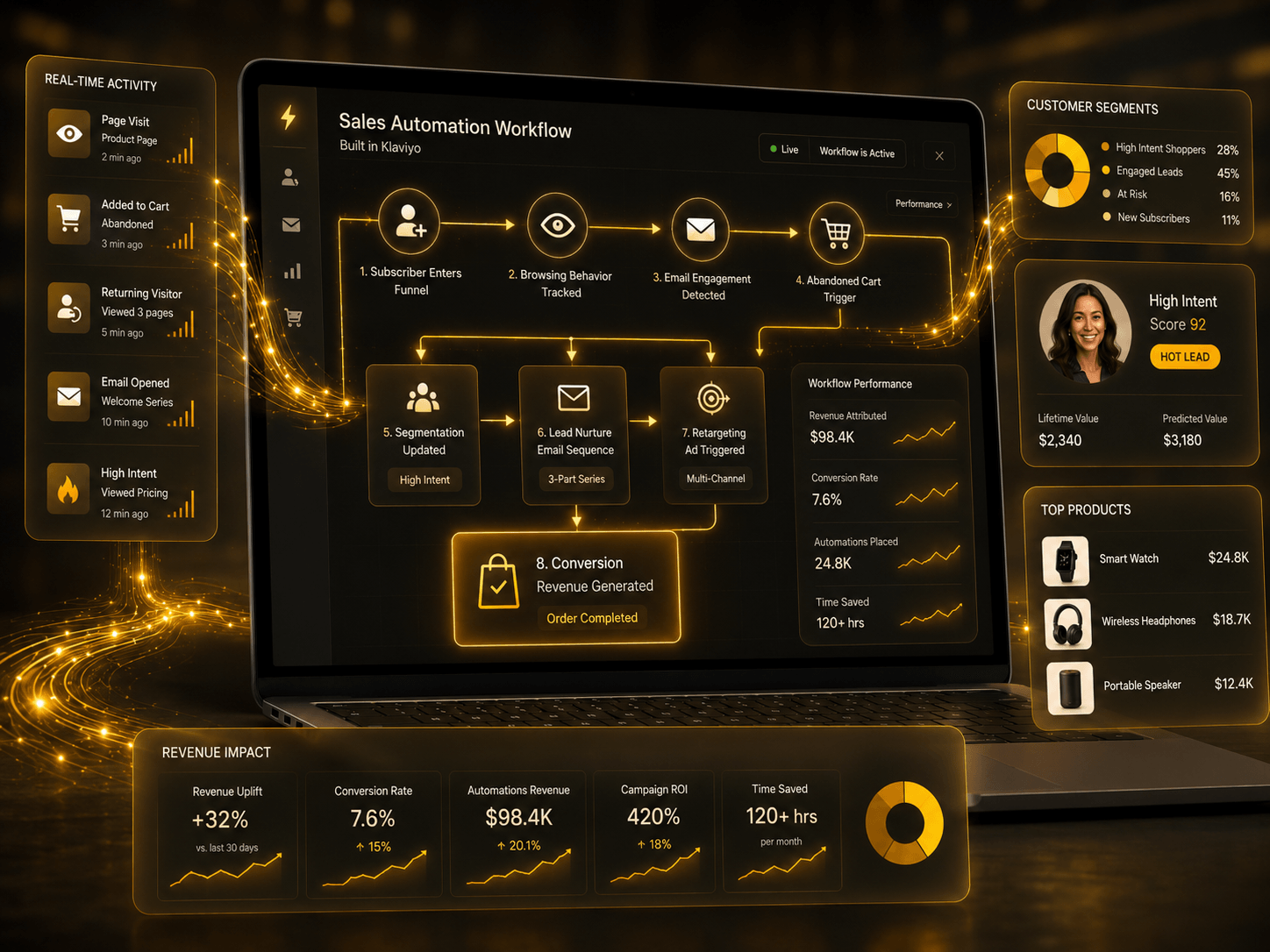
This connects website behavior directly with your CRM and automation tools. That’s when personalization moves from UX improvement to revenue strategy.
The Conversion Impact of Website Personalization
Companies implementing behavioral personalization often see:
- 20–40% increase in conversion rates
- Higher engagement time
- Lower bounce rates
- More qualified leads
- Shorter sales cycles
Why? Because personalization reduces cognitive load and increases relevance. Relevance drives action.
Why Most Personalization Efforts Underperform
Many companies assume that implementing personalization technology automatically improves performance. In reality, most personalization initiatives fail because the supporting strategy and infrastructure are incomplete.
Common issues include disconnected CRM systems, poorly structured audience segmentation, fragmented behavioral data, and automation workflows that are not integrated into the website experience itself.
Another major problem is static personalization logic. Many websites apply fixed rules that do not evolve based on changing customer behavior or funnel progression. This creates experiences that feel generic despite technically being “personalized.”
Effective behavioral personalization requires more than technology. It requires:
- Structured behavioral tracking
- CRM synchronization
- Clear funnel architecture
- Automation connected to user intent
- Segmentation aligned with business goals
- Revenue attribution visibility
When these elements work together, personalization becomes scalable, measurable, and strategically valuable.
Schedule a Website Personalization Audit and discover where your current system is limiting growth.
How High-Growth Companies Implement Behavioral Personalization
High-growth companies don’t just “add personalization.”They architect it into their CMS. Whether on WordPress or Shopify, they ensure:
- Behavioral data flows into CRM systems
- CMS content adapts based on segmentation
- Automation workflows inform on-site experiences
- Personalization aligns with funnel stages
- Revenue attribution is measurable
At Cultura Interactive, we build adaptive systems directly into WordPress and Shopify environments, transforming traditional CMS platforms into intelligent growth infrastructures.
Is Your Website Adapting to User Behavior?
Ask yourself:
- Does your site change based on traffic source?
- Are CTAs aligned with the funnel stage?
- Is website behavior connected to your CRM?
- Do returning visitors see different content?
- Can you track personalization impact on revenue?
If the answer is no, your website is leaving conversions on the table.
Ready to Turn Your Website Into an Adaptive Growth System?
At Cultura Interactive, we help U.S. companies implement behavioral personalization strategies integrated with marketing automation, CRM systems, and advanced funnel architecture.
If your website isn’t adapting to user behavior, you’re losing revenue every day.
Schedule your Growth Strategy Call and discover how personalization can increase your conversions.