

Turn More Customer Intent Into Revenue
Evidence-based eCommerce CRO for established Shopify and
WooCommerce businesses.
Qualified visitors are already reaching your store. Cultura identifies where their progress breaks down, prioritizes the opportunities with the greatest commercial value, and directly implements measurable improvements across the shopping experience.

A Functional Store Can Still Lose
Customer Intent
Customers experience product discovery, evaluation, selection, cart, and checkout as one connected journey. Friction at any stage can make the next decision harder—even when the store looks polished and operates as intended.
Disconnected optimization
- Opinion-driven changes
- Generic best practices
- Recommendations without execution
- Activity measured by releases
Revenue-led CRO
- Evidence-based priorities
- Store-specific customer behavior
- Strategy through implementation
- Progress evaluated through customer and commercial performance
Effective eCommerce conversion rate optimization connects customer behavior, performance data, UX strategy, technical implementation, and measurement. The objective is not to change more elements. It is to identify and resolve the constraints that matter most.
Where the Buying Journey Can Work Harder
Conversion opportunities rarely come from one page.
They emerge across the entire buying journey.
Navigation, search, collections, merchandising, and promotional content should help customers reach relevant products with less effort.
The objective is not simply to expose more inventory. It is to help customers find and compare the options most relevant to their needs.
Customers hesitate when product information, options, value, delivery expectations, or trust signals remain unclear.
Deeper subscriber-experience and retention requirements are addressed through Cultura’s Subscription Retention service.
A strong product experience can still lose momentum as customers approach the transaction. Cart interactions, mobile usability, technical performance, cross-selling, checkout-adjacent content, and unexpected uncertainty can all interrupt progression.
The priority is to identify which obstacles materially affect the purchase journey and resolve them within the technical capabilities of the commerce platform.
Analytics and behavioral tools can generate extensive information without establishing what the business should do next.
A structured CRO process turns evidence into prioritized action by considering:
- Strength and consistency of the evidence
- Expected commercial importance
- Strategic relevance
- Ability to measure the result
This gives marketing, design, development, and leadership teams a shared basis for deciding what to optimize first.
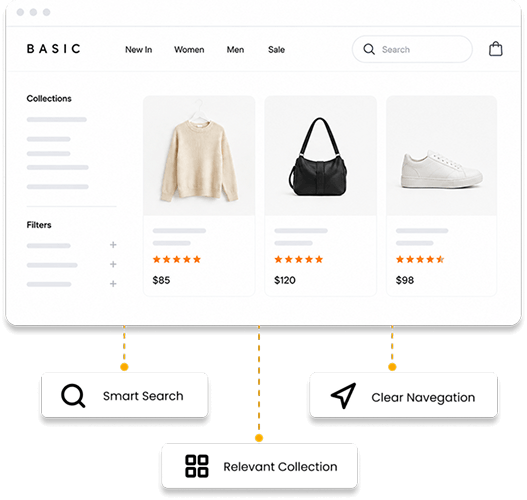
Improve Product Discovery
Navigation, search, collections, merchandising, and promotional content should help customers reach relevant products with less effort.
The objective is not simply to expose more inventory. It is to help customers find and compare the options most relevant to their needs.
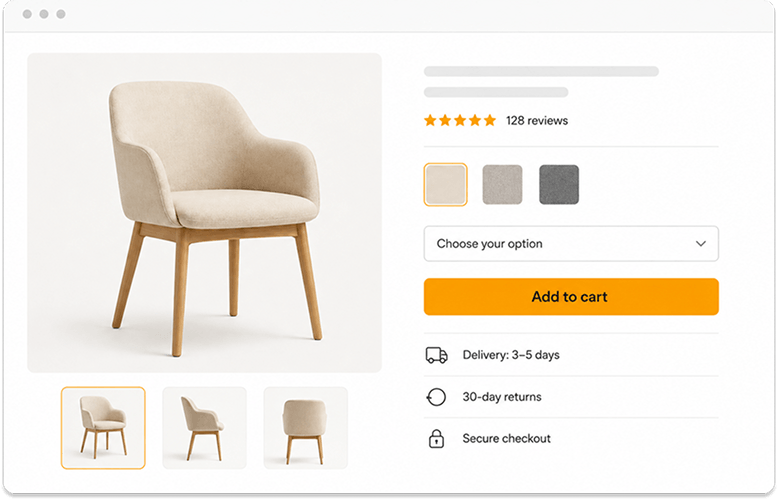
Strengthen Decision Confidence
Customers hesitate when product information, options, value, delivery expectations, or trust signals remain unclear.
Deeper subscriber-experience and retention requirements are addressed through Cultura’s Subscription Retention service.
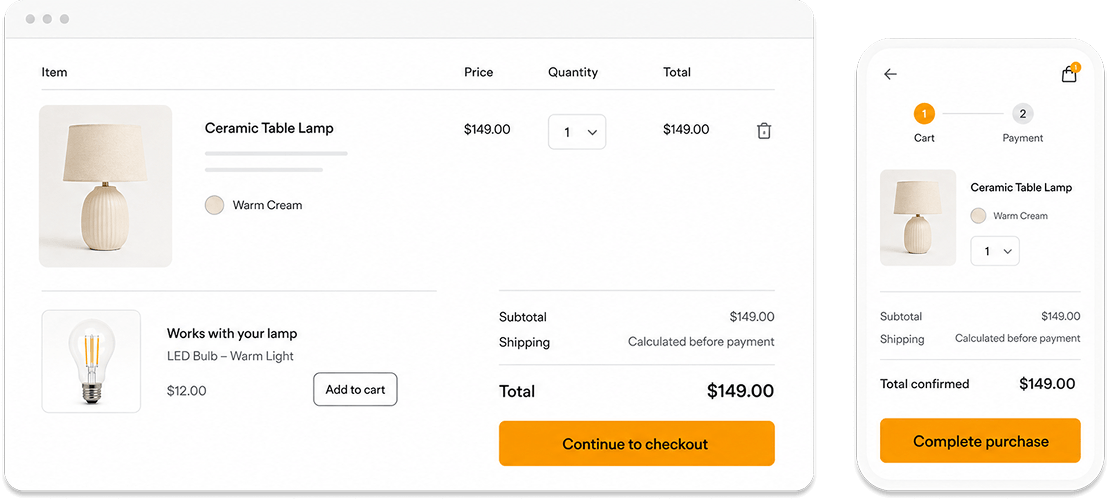
Reduce Friction Near Purchase
A strong product experience can still lose momentum as customers approach the transaction. Cart interactions, mobile usability, technical performance, cross-selling, checkout-adjacent content, and unexpected uncertainty can all interrupt progression.
The priority is to identify which obstacles materially affect the purchase journey and resolve them within the technical capabilities of the commerce platform.
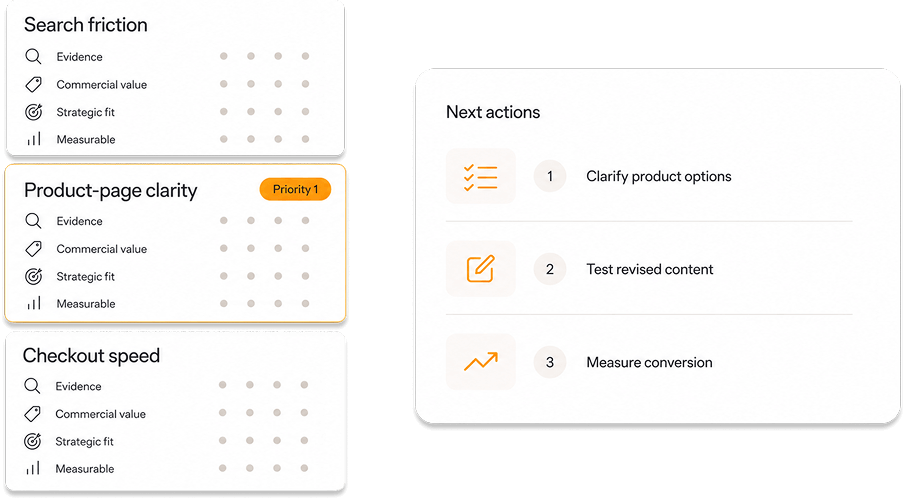
Create a Reliable Optimization Roadmap
Analytics and behavioral tools can generate extensive information without establishing what the business should do next.
A structured CRO process turns evidence into prioritized action by considering:
- Strength and consistency of the evidence
- Expected commercial importance
- Strategic relevance
- Ability to measure the result
This gives marketing, design, development, and leadership teams a shared basis for deciding what to optimize first.
CRO Within a Connected Revenue System
Conversion performance depends on more than the storefront. Customer data, personalization, lifecycle marketing, technical execution, and measurement work together to turn demand into revenue.
CRO identifies where customer intent is lost, implements prioritized improvements, and uses performance data to guide continuous optimization across the customer journey.

From Evidence to Implemented
Improvement
Cultura brings research, strategy, UX, development, and measurement together around a shared commercial objective. The process follows the evidence rather than a predetermined CRO checklist.
The engagement begins by identifying customer friction across discovery, evaluation, product selection, cart, and purchase. Analysis combines behavioral, technical, and business evidence based on the store, available data, and business objectives.
Metrics show where performance changes, while behavioral evidence explains why. Customer behavior is evaluated alongside technical and commercial context to identify meaningful optimization opportunities.
Potential improvements are prioritized based on evidence, expected impact, implementation effort, technical feasibility, and business value. The result is a roadmap that connects each recommendation to a clear customer and commercial objective.
Cultura designs, develops, implements, and evaluates approved improvements across UX/UI, content, merchandising, storefront development, integrations, and other prioritized customer experiences. Development is fully integrated into the Revenue Optimization process.
Implemented improvements are evaluated using analytics, behavioral research, testing, and performance analysis. The appropriate validation method depends on the business, available data, and technical conditions, helping identify what changed and what should be optimized next.
1. Diagnose the Revenue Journey
The engagement begins by identifying customer friction across discovery, evaluation, product selection, cart, and purchase. Analysis combines behavioral, technical, and business evidence based on the store, available data, and business objectives.
2. Understand Customer Behavior
Metrics show where performance changes, while behavioral evidence explains why. Customer behavior is evaluated alongside technical and commercial context to identify meaningful optimization opportunities.
3. Prioritize the Opportunities
Potential improvements are prioritized based on evidence, expected impact, implementation effort, technical feasibility, and business value. The result is a roadmap that connects each recommendation to a clear customer and commercial objective.
4. Implement the Approved Work
Cultura designs, develops, implements, and evaluates approved improvements across UX/UI, content, merchandising, storefront development, integrations, and other prioritized customer experiences. Development is fully integrated into the Revenue Optimization process.
5. Validate and Continue Improving
Implemented improvements are evaluated using analytics, behavioral research, testing, and performance analysis. The appropriate validation method depends on the business, available data, and technical conditions, helping identify what changed and what should be optimized next.
Where Conversion Opportunities
Are Evaluated
The scope follows customer evidence and business priorities. It is not limited to a
fixed sequence of page reviews or a generic collection of CRO tactics.
Optimize the shopping journey across landing pages, navigation, product pages, mobile, merchandising, forms, subscriptions, and cart experiences. Recommendations focus on evidence-based improvements, with redesigns only when justified by data.
Build data-driven hypotheses and measure results using the right validation approach. Success metrics may include conversion rate, revenue per visitor, add-to-cart behavior, average order value, and performance across devices or customer segments.
Research and
Performance Analysis
Connect quantitative performance with customer behavior to identify friction, technical issues, and opportunities for improvement across the customer journey. Analysis may include device, channel, product category, customer type, or other relevant segments when supported by data.
Experience and
Merchandising
Optimize the shopping journey across landing pages, navigation, product pages, mobile, merchandising, forms, subscriptions, and cart experiences. Recommendations focus on evidence-based improvements, with redesigns only when justified by data.
Experimentation
and Measurement
Build data-driven hypotheses and measure results using the right validation approach. Success metrics may include conversion rate, revenue per visitor, add-to-cart behavior, average order value, and performance across devices or customer segments.
Find the Priorities Before
Changing the Store
The Revenue Opportunity Assessment provides the starting point for understanding where the existing customer journey may be limiting revenue.
By connecting customer behavior, performance data, and business priorities, the assessment helps distinguish meaningful opportunities from isolated symptoms. It provides clearer direction on what deserves attention first—before investing in another redesign, app, campaign, or disconnected improvement.
Customer Journey Assessment
Friction points and journey gaps.
Commercial Assessment
Revenue opportunity and business priorities.
Technical Assessment
Platform constraints and implementation needs.
Measurement Strategy
Success metrics and next recommendations.
Build a More Effective Revenue Journey
Explore practical guidance on customer behavior, product-page performance, and
turning the store into a more productive revenue channel.
FAQ
1. What is eCommerce conversion rate optimization?
eCommerce conversion rate optimization is the structured process of improving how effectively an online store turns customer intent into commercially valuable actions.
It combines analytics, behavioral research, UX evaluation, merchandising, experimentation, content, measurement, and technical implementation. Although completed purchases are a central measure, CRO also examines the decisions leading toward them, including product discovery, product evaluation, add-to-cart behavior, cart progression, and subscription selection.
2. How is CRO different from redesigning an eCommerce website?
A redesign changes some or all of the store’s visual and technical experience. CRO determines what should change based on customer evidence, commercial importance, and the ability to evaluate the result.
Research may support a redesign, but it may also show that focused improvements to navigation, product pages, mobile interactions, merchandising, or cart experiences can address the most important problems without replacing the entire store. Cultura optimizes before redesigning unless the evidence supports broader change.
3. Does Cultura only provide a CRO audit?
No. Cultura supports the process from research and prioritization through UX/UI, content, development, implementation, validation, and ongoing improvement.
Cultura directly implements approved recommendations so the engagement does not end with an issue list or strategic presentation. The precise scope depends on the business objectives, platform, data reliability, technical environment, internal capabilities, and opportunities identified.
4. How does development fit within Cultura’s CRO service?
Development is the implementation layer of the Revenue Optimization process, not a separate add-on service.
Cultura’s development team works alongside strategy, UX, content, marketing, and analytics to move prioritized recommendations into the live customer experience. This may include storefront changes, integrations, technical performance improvements, subscription experiences, custom functionality, and other work required to implement and evaluate the CRO roadmap.
5. Which eCommerce platforms does Cultura support?
Cultura works primarily with Shopify, Shopify Plus, WooCommerce, and connected eCommerce systems.
The CRO methodology is platform-agnostic, but implementation is adapted to each store’s technical architecture, themes, apps, plugins, integrations, subscription technology, checkout capabilities, and release requirements.
6. What areas of an eCommerce store can be optimized?
The scope can include the homepage, navigation, search, collections, merchandising, product pages, subscription selection, mobile usability, cart, checkout-adjacent experiences, forms, lead capture, technical performance, and other parts of the customer journey.
Priorities are determined by customer evidence and expected commercial importance rather than by reviewing every page in a predetermined sequence.
7. Does Cultura conduct A/B testing?
Yes. Subscription events can inform onboarding, product education, renewal communication, and responses to changes in subscriber status.
Businesses requiring deeper work involving payment recovery, cancellation flows, subscriber portals, pause, skip, swap, involuntary churn, or subscriber-experience optimization should use Cultura’s dedicated Subscription Retention service.
8. How long does eCommerce conversion optimization take?
No. The approach is technology-agnostic.
Platform and integration recommendations depend on the business model, customer data, required journey logic, existing technology, implementation needs, and long-term operating goals. Strategy should determine the technology—not the other way around.
9. Can CRO help if the store needs more traffic?
There is no universal qualification threshold.
Suitability depends on whether the business has enough customer activity, usable data, and meaningful lifecycle opportunities to support an ongoing program. The Revenue Opportunity Assessment helps determine whether the engagement is appropriate and where it should begin.
10. How does Cultura decide what to optimize first?
Measurement may include conversion, customer progression, engagement, repeat purchase, reactivation, journey interaction, and revenue contribution. The appropriate metrics depend on the purpose of each journey.
Open and click rates may provide supporting information, but they should not be treated as the complete measure of lifecycle performance.
11. What is a Revenue Opportunity Assessment?
Timing depends on data quality, existing configuration, journey complexity, implementation requirements, customer buying cycles, traffic, and testing volume.
Some improvements can be implemented relatively quickly, while reliable performance evaluation may require longer observation. Cultura does not promise a universal timeline or guarantee a specific result.
Let's unlock your store's full revenue potential.
Get a custom audit and see exactly where you’re losing
revenue—and how to fix it.
- Revenue leak breakdown
- Conversion & retention opportunities
- Personalization roadmap
- Priority action plan
- Estimated revenue impact