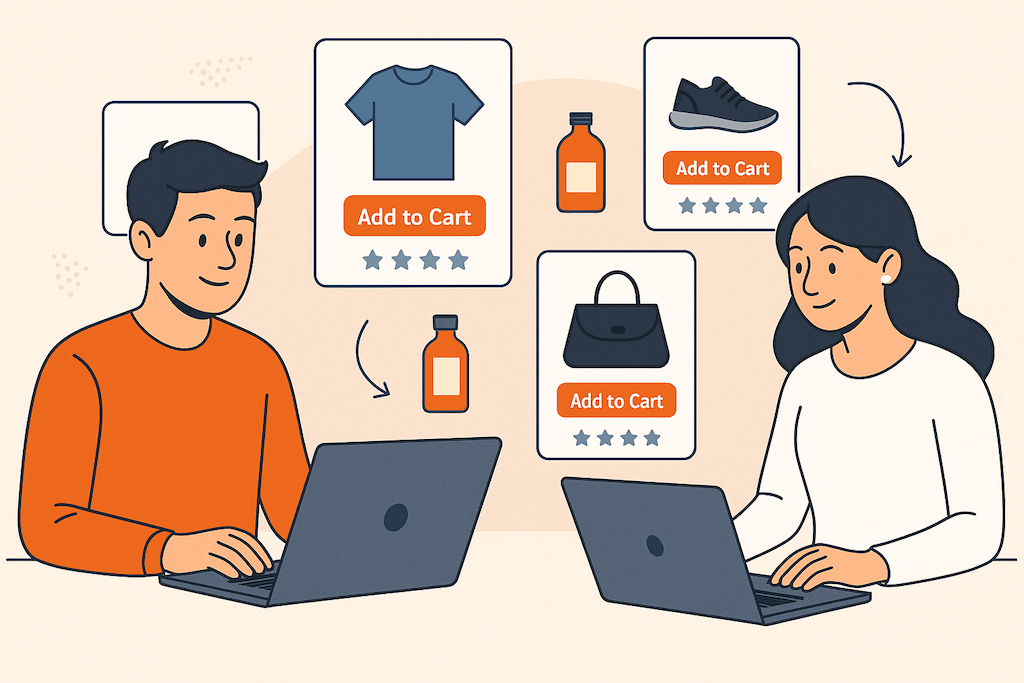


Most websites treat every visitor the same: The same headline, the same CTA, the same offer, the same messaging; but your visitors aren’t the same, they arrive from different channels, they have different pain points, they are at different stages of the buying journey.
Yet most companies still present a static experience, but behavioral personalization changes that. Instead of showing generic content, smart websites adapt in real time, based on who the visitor is, how they arrived, and what they’ve done, and when that happens, conversion rates don’t just improve. They multiply.
What Is Behavioral Website Personalization?
Behavioral website personalization is the practice of dynamically adapting website content based on user behavior, attributes, and intent signals.
This includes personalization based on:
- Pages visited
- Time on site
- Traffic source
- Industry
- Location
- Device
- Past interactions
- CRM data
- Purchase history
Instead of a static website, you create an adaptive experience that evolves with the visitor.That’s where real growth begins.
Why Static Websites Kill Conversions
Here’s the reality:
A first-time visitor from a cold Google search
≠
A returning visitor who already downloaded your case study
≠
A prospect coming from a retargeting campaign
Yet most websites show all three users the same message; that creates friction and friction kills conversions. High-growth companies remove friction by aligning messaging with intent. That alignment is powered by behavioral personalization.
First-Time Visitor
Cold Google Search
Returning Visitor
Read Case Study
Warm Prospect
Retargeting Ad
"Welcome to our Company"
One generic message for everyone. Ignores context, ignores intent, and kills conversions.
"Read our Beginner's Guide"
Educates the first-time visitor with low-friction content.
"See Advanced Features"
Pushes the returning reader to the next logical step.
"Claim Your 20% Offer"
Closes the deal with the retargeted, high-intent prospect.
5 Ways Smart Websites Use Behavioral Personalization
Smart personalization isn’t about installing plugins. It’s about architecting your CMS to respond intelligently to user behavior.
1. Dynamic Headlines Based on Traffic Source
Visitors from paid ads often have different intent than organic search visitors. With dynamic website content, you can:
- Adjust headlines based on campaign
- Match ad messaging with landing page copy
- Reinforce industry-specific positioning
Result: Higher message alignment → higher conversions.
2. Personalized CTAs Based on Funnel Stage
Not every visitor is ready to “Book a Demo.” Smart websites adjust CTAs based on behavior:
- First-time visitor → Download Guide
- Engaged returning visitor → Schedule Strategy Call
- High-intent user → Request Proposal
This moves users naturally through the funnel instead of forcing premature sales actions.
3. Industry-Specific Messaging
If you serve multiple industries, your homepage shouldn’t speak generically to all of them.
Behavioral personalization allows you to:
- Detect industry from data enrichment
- Show relevant case studies
- Highlight specific pain points
- Display industry-tailored testimonials
Relevance increases trust. Trust increases conversions.
4. Smart Content for Returning Visitors
Returning visitors are warm. Your website should recognize them.
Examples:
- Hide already downloaded offers
- Show next-step content
- Display progress-based messaging
- Introduce advanced offers
Instead of restarting the journey, you continue it.
5. Personalized Nurturing Integrated with Automation
Behavioral personalization becomes exponentially more powerful when integrated with marketing automation.
For example:
- User visits pricing page → triggers targeted email sequence
- User spends 3+ minutes on services page → sends sales alert
- User downloads specific resource → enters segmented workflow
This connects website behavior directly with your CRM and automation tools. That’s when personalization moves from UX improvement to revenue strategy.
The Conversion Impact of Website Personalization
Companies implementing behavioral personalization often see:
- 20–40% increase in conversion rates
- Higher engagement time
- Lower bounce rates
- More qualified leads
- Shorter sales cycles
Why? Because personalization reduces cognitive load and increases relevance. Relevance drives action.
Why Most Website Personalization Efforts Fail
Many companies assume that installing a personalization plugin or app is enough. It isn’t.
Personalization often fails not because of the technology, but because the underlying strategy and data architecture are missing.
Common issues include:
- Customer behavior data is not centralized or activated
- CRM systems are disconnected from on-site interactions
- Audience segments are not defined before implementation
- Automation workflows operate independently from the website experience
- Personalization rules are static instead of behavior-driven
- Funnel stages are not considered in the user journey
In these cases, personalization becomes superficial.
A banner changes; a recommendation appears, but the overall experience remains static. Technology can support personalization, but without strategy it never becomes a real growth lever.
True behavioral personalization requires:
- Structured behavioral data
- Clear funnel architecture
- Automation connected to user intent
- CRM synchronization
- Revenue attribution tied to user journeys
When these elements work together, websites begin to adapt dynamically to each visitor. That’s the difference between simple customization and intelligent personalization.
Schedule a Website Personalization Audit and discover where your current system is limiting growth.
How High-Growth Companies Implement Behavioral Personalization
High-growth companies don’t just “add personalization.”They architect it into their CMS. Whether on WordPress or Shopify, they ensure:
- Behavioral data flows into CRM systems
- CMS content adapts based on segmentation
- Automation workflows inform on-site experiences
- Personalization aligns with funnel stages
- Revenue attribution is measurable
At Cultura Interactive, we build adaptive systems directly into WordPress and Shopify environments, transforming traditional CMS platforms into intelligent growth infrastructures.
Is Your Website Adapting to User Behavior?
Ask yourself:
- Does your site change based on traffic source?
- Are CTAs aligned with the funnel stage?
- Is website behavior connected to your CRM?
- Do returning visitors see different content?
- Can you track personalization impact on revenue?
If the answer is no, your website is leaving conversions on the table.
Ready to Turn Your Website Into an Adaptive Growth System?
At Cultura Interactive, we help U.S. companies implement behavioral personalization strategies integrated with marketing automation, CRM systems, and advanced funnel architecture.
If your website isn’t adapting to user behavior, you’re losing revenue every day.
Schedule your Growth Strategy Call and discover how personalization can increase your conversions.